

Introduction to the Era of Machine Creativity
The rapid evolution of artificial intelligence has shifted public perception from science fiction tropes to daily utility. When examining how generative AI works and what beginners should know, the conversation frequently centers on computer systems that produce novel text, images, audio, and code. Unlike traditional software that executes rigid, pre-written instructions, modern generative systems analyze vast datasets to identify underlying patterns and generate entirely new outputs. This technological shift relies heavily on advancements detailed in research by institutions like the Stanford Institute for Human-Centered Artificial Intelligence, marking a profound change in how machines process information and assist human endeavors.
Entering this technological landscape requires moving past surface-level definitions. Software development historically operated on explicit rules: input data plus human-crafted logic equaled output. Generative systems invert this dynamic by taking input data and desired outputs to train statistical models that discover the rules independently. Understanding this foundational mechanism removes the mystery surrounding artificial intelligence, replacing apprehension with practical knowledge. Observers tracking this sector through resources like MIT Technology Review recognize that these tools represent statistical approximations rather than sentient thought, a distinction central to practical digital literacy.
Deconstructing the Engine: Neural Networks and Training Data
At the core of generative technology lies the artificial neural network, a computing architecture loosely inspired by biological brains. These networks consist of layers of interconnected mathematical nodes, or “neurons,” that process incoming signals. When analyzing how generative AI works and what beginners should know, recognizing the role of training data is paramount. A model learns by ingesting billions of examples—ranging from digitized literature to high-resolution photographs—and adjusting internal parameters, known as weights, to minimize error rates during prediction tasks.
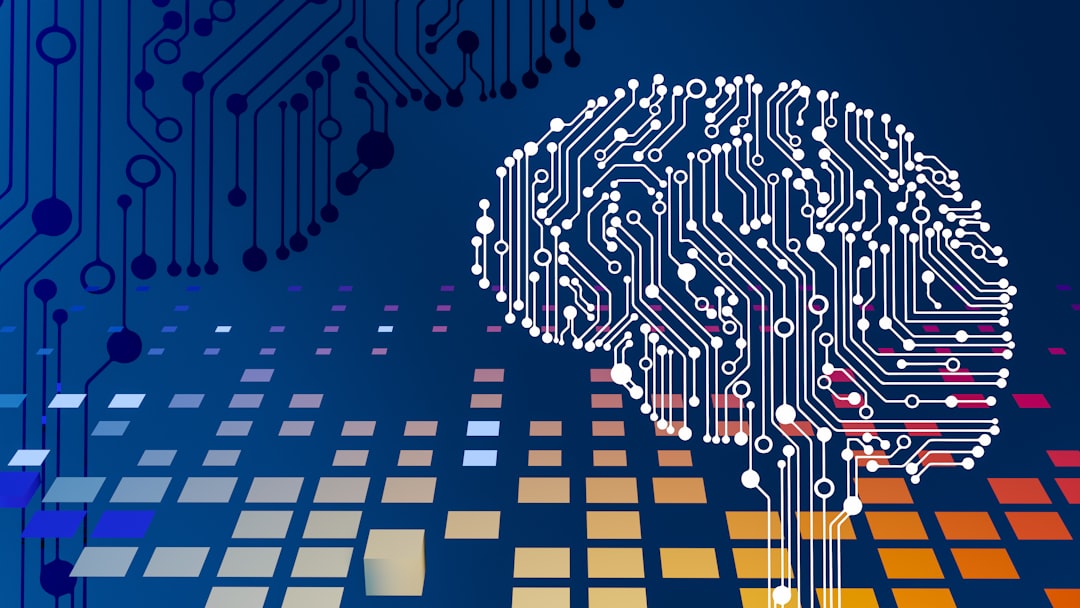
The training phase demands immense computational power, typically managed by specialized hardware such as graphics processing units. During this phase, the system identifies correlations. For example, in text generation models, the network learns which words frequently follow others within specific contexts. Research published by organizations like the Association for Computing Machinery highlights that the quality and diversity of the training corpus directly dictate the output fidelity and behavioral biases of the resulting system. Without curated, diverse datasets, models fail to generalize effectively across varied real-world scenarios.
Architectural Foundations: Transformers and Diffusion Models
Modern generative applications rely on specific mathematical frameworks that dictate how information is processed and synthesized. The introduction of the Transformer architecture revolutionized natural language processing by utilizing a mechanism called self-attention. This mechanism allows the model to weigh the significance of different words in a sentence simultaneously, regardless of their distance from one another. This capability enables systems to maintain context across long documents, producing coherent paragraphs rather than disjointed sentences.
Visual generation relies on entirely different mathematical paradigms, most notably diffusion models. These systems operate by introducing random noise to training images and then training a neural network to reverse that process, effectively learning how to reconstruct clear images from static. As documented in technical analyses by the IEEE Computer Society, combining these foundational architectures allows modern applications to handle multimodal tasks, seamlessly translating text prompts into images, audio, or structured data formats.

Comparing Generative Paradigms
| Paradigm | Primary Use Case | Core Mechanism | Training Requirement |
|---|---|---|---|
| Transformer Models | Text generation, translation, coding | Self-attention mechanisms | Massive text corpora |
| Diffusion Models | Image creation, audio synthesis | Iterative noise reduction | Large-scale image datasets |
| Generative Adversarial Networks (GANs) | Data augmentation, style transfer | Competitive generator-discriminator loops | Dual-network balancing |
Practical Applications Across Industries
The integration of generative models extends far beyond experimental laboratories, reshaping workflows in software engineering, content creation, and scientific research. Software developers utilize these systems to accelerate coding tasks, leveraging models trained on open-source repositories to autocomplete functions, write unit tests, and debug existing scripts. This application shifts the human role from manual syntax writing to architectural oversight and system validation, a trend monitored closely by industry analysts at Gartner.
In creative fields, visual artists and designers employ generative tools for rapid prototyping and conceptual exploration. Instead of starting with a blank canvas, professionals generate multiple visual variations based on descriptive prompts, refining selected concepts into final assets. Similarly, the pharmaceutical sector applies these techniques to drug discovery, utilizing generative algorithms to propose novel molecular structures with specific therapeutic properties. These use cases illustrate that artificial intelligence functions primarily as a force multiplier for human productivity and innovation.
Navigating Limitations, Biases, and Ethical Considerations
Despite impressive capabilities, generative systems exhibit significant operational limitations that every beginner must acknowledge. Models do not possess factual databases in the human sense; instead, they generate responses based on statistical probability. This characteristic leads to “hallucinations,” instances where the system produces entirely fabricated information presented with absolute confidence. Furthermore, because models learn from human-generated data, they frequently absorb and amplify historical biases, leading to skewed outputs that require rigorous human oversight.

Data privacy and copyright compliance represent ongoing challenges within the technology sector. The ingestion of copyrighted material for training purposes has sparked extensive legal and ethical debates, with regulatory bodies worldwide working to establish clear guidelines. Organizations such as the World Economic Forum emphasize the necessity of governance frameworks that balance technological innovation with intellectual property rights and ethical deployment standards. Understanding these complexities ensures that users approach generative tools with appropriate caution and critical thinking.
Frequently Asked Questions
What is the difference between traditional software and generative artificial intelligence?
Traditional software executes explicit, pre-written human logic to transform inputs into outputs. Generative artificial intelligence uses statistical models trained on vast datasets to discover patterns independently, enabling it to create entirely new content rather than following rigid procedural rules.
Can generative models think or reason like humans?
No, these systems do not possess consciousness, emotions, or genuine reasoning capabilities. They operate through complex mathematical computations and statistical predictions, determining the most probable sequence of words, pixels, or notes based on their training.
Why do generative models sometimes produce incorrect or fabricated information?
Because models generate responses based on statistical likelihood rather than factual retrieval, they can link concepts incorrectly. When the probability calculation favors a plausible-sounding sequence over factual accuracy, the system produces a hallucination.
How do developers prevent models from generating harmful content?
Developers employ techniques known as alignment, reinforcement learning from human feedback, and strict content filtering protocols. These processes train the model to recognize and refuse prompts that violate safety guidelines or ethical standards.
Do beginners need coding experience to use generative AI tools?
No coding experience is required for most consumer-facing generative applications. Modern interfaces rely on natural language prompting, allowing users to interact with systems using everyday conversational instructions.
Conclusion
Mastering how generative AI works and what beginners should know provides a solid foundation for navigating an increasingly automated world. By looking past the marketing hype and understanding the underlying mechanics—such as neural networks, training datasets, and probabilistic outputs—users can evaluate these tools with informed discernment. The technology functions not as a replacement for human intellect, but as a powerful statistical engine capable of accelerating creativity and problem-solving. As these architectures mature, maintaining a balanced perspective focused on practical utility, ethical awareness, and continuous learning remains essential for anyone engaging with the digital tools of the future.
Featured Image Credit: Generated/Sourced via Unsplash.
Inline Images Credit: Sourced from Pexels, Unsplash, Pixabay, NASA, Wikimedia, and Openverse free stock databases.
Disclaimer: This article is AI-generated for informational and educational purposes. While we strive to provide high-quality context and authority, the content should not be used as professional advice. The author/website assumes no liability for external links or factual omissions.