

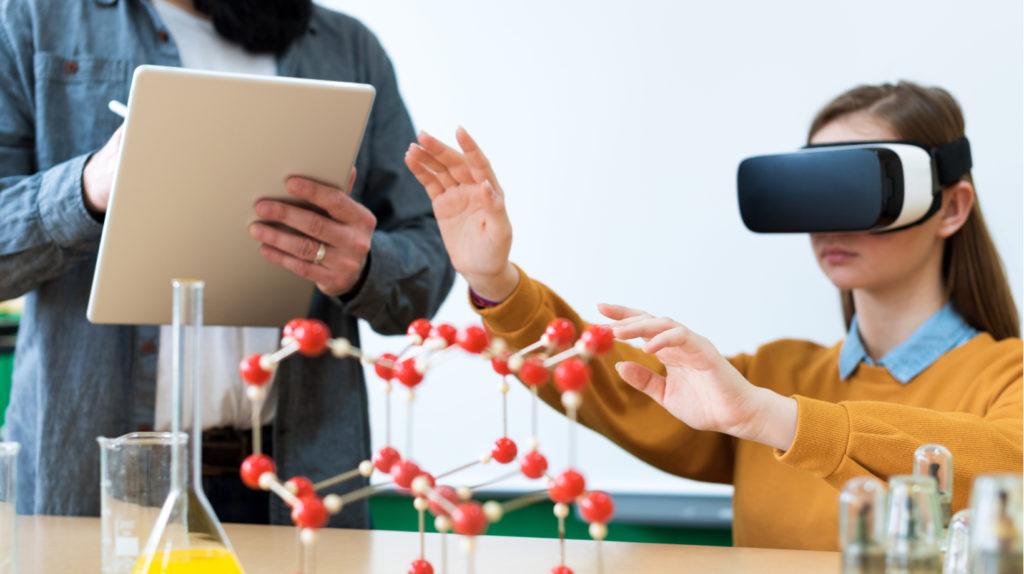
The way students learn has always evolved — from clay tablets to printed textbooks, from blackboards to interactive smartboards. But the shift happening right now is arguably the most dramatic leap in educational history. Virtual reality (VR) is no longer a futuristic concept reserved for gaming arcades or science fiction films. It’s inside classrooms, medical schools, corporate training centers, and special education programs, and it’s changing how knowledge is absorbed, retained, and applied.
This isn’t about novelty. Decades of cognitive science research suggest that people learn better by doing than by watching or reading. VR operationalizes that principle at scale. When a high school student can walk through the chambers of ancient Rome, or a nursing student can practice a clinical procedure without risk to real patients, the educational value is not just supplemental — it’s transformative.
Why VR and Education Are a Natural Fit
Learning is fundamentally an act of engagement. The more senses involved, the more pathways the brain creates to store and retrieve information. Traditional classroom instruction, while valuable, often relies heavily on visual and auditory channels. VR expands that palette dramatically.
Research from the University of Maryland found that people who learned through VR had an 8.8% improvement in recall accuracy compared to those who learned the same content via desktop computers. The study also noted that participants felt a heightened sense of “presence” — a psychological state where the brain treats the virtual environment as real — which directly correlates with deeper information processing.
This isn’t surprising when you consider how immersive environments work. In VR, students aren’t passive observers. They’re actors in a scenario. They manipulate objects, make decisions, and face consequences — all within a safe, controlled environment. That feedback loop is what makes the learning stick.
There’s also the emotional dimension. Empathy-driven learning — where a student experiences color blindness firsthand, or navigates a historically significant environment from a first-person perspective — has shown measurable impact on attitude shifts and social awareness. Stanford University’s Virtual Human Interaction Lab has produced substantial research demonstrating that VR-based perspective-taking generates stronger empathetic responses than reading or watching videos about the same experiences.
Key Trends Defining VR in Education Right Now
1. Simulated Lab and Clinical Environments
One of the clearest use cases for VR in education is in fields where hands-on practice is essential but real-world training carries risk. Medical education has been among the earliest and most enthusiastic adopters.
Programs using platforms like Osso VR allow surgical residents to rehearse orthopedic procedures before ever touching a patient. Studies conducted on these platforms show that trainees who practiced in VR performed surgeries with measurably greater precision and speed compared to those trained exclusively through traditional observation. This is not about replacing mentorship — it’s about augmenting preparation so that live training becomes more effective.
Chemistry, biology, and physics labs present similar opportunities. Schools where lab facilities are underfunded or where safety hazards limit experimentation have begun using platforms like Labster to offer virtual labs where students can run experiments, observe chemical reactions, and analyze results. Labster’s own outcome studies show that students using their virtual labs score significantly higher on conceptual assessments than control groups.
2. Historical and Cultural Immersion
Understanding history through dates and narratives in a textbook produces a kind of abstract knowledge. Standing inside a reconstructed ancient environment, observing architectural details and understanding the geographic context — that produces something closer to real comprehension.
Google’s Arts & Culture Expeditions program pioneered the idea of taking classrooms on virtual field trips to the Louvre, the Amazon rainforest, or the surface of Mars. The concept has since been expanded by platforms like CoSpaces Edu and Nearpod VR, which allow teachers to guide students through curated immersive experiences tied directly to curriculum standards.
This trend is particularly powerful for subjects like geography, social studies, anthropology, and world literature. Students reading about the Great Barrier Reef gain a different kind of understanding when they can also observe its bleaching patterns in an immersive environment — something no photograph can replicate with the same visceral clarity.
3. Special Education and Accessibility
VR’s potential in special education is still underexplored in mainstream discourse, but the applications are some of the most compelling in the entire field. Students with autism spectrum disorder (ASD), for example, often struggle with social interactions in unpredictable environments. VR provides a controlled, repeatable social simulation — a practice arena where a student can rehearse conversations, interpret body language, and experience the consequences of social choices without the anxiety of real-world unpredictability.
Organizations like Floreo are building VR experiences specifically designed for neurodiverse learners, covering skills like crossing the street safely, maintaining eye contact, and managing transitions. Early clinical trials have produced promising results, with therapists and parents noting reduced anxiety and improved generalization of skills to real-world contexts.
For students with physical disabilities, VR also removes the constraints of mobility. A learner who cannot attend a field trip, access a physical science lab, or visit a cultural institution due to physical limitations can engage with those experiences fully through VR, closing an equity gap that has historically been difficult to address through other means.
4. Workforce and Vocational Training
VR in education is not limited to K-12 or higher education in the traditional academic sense. Vocational training — one of the most underfunded and underappreciated pillars of the educational ecosystem — is experiencing a VR-driven renaissance.
Walmart, Boeing, and UPS are among the corporations that have invested heavily in VR-based employee training. Walmart’s VR training program, which deployed over 17,000 Oculus headsets across U.S. stores, focuses on customer service scenarios, compliance training, and high-pressure crowd management simulations. Employees who trained in VR showed improved performance outcomes and reported higher engagement with the material.
Community colleges and trade schools are beginning to integrate VR into programs for electricians, plumbers, HVAC technicians, and emergency medical responders — fields where costly mistakes during training can be dangerous and where real equipment is expensive. The return on investment is quantifiable: fewer errors, shorter training cycles, and higher first-attempt success rates in certification exams.
5. AI-Integrated and Adaptive VR Learning
The next frontier isn’t just VR — it’s VR that learns alongside the student. Artificial intelligence is beginning to power adaptive VR environments that respond to a learner’s performance in real time, adjusting difficulty, pacing, and feedback automatically.
Platforms like Prisms VR are combining immersive environments with data-driven insights to track not just whether a student got an answer right, but how they interacted with the material — where they looked, how long they hesitated, which strategies they tried. This granular data allows instructors to identify gaps in understanding that would be invisible in a standard classroom setting.
The integration of AI-driven avatars and non-player characters within educational VR environments is advancing rapidly. These virtual instructors and scene characters can respond dynamically to student input, enabling language learning simulations, historical dialogue re-enactments, and scenario-based training sessions that feel genuinely interactive rather than scripted.
VR Education Platforms at a Glance: Features, Focus Areas, and Best Use Cases
| Platform | Primary Use Case | Age Group | AI Integration | Hardware Required | Cost Model |
|---|---|---|---|---|---|
| Labster | Science virtual labs | High school, University | Moderate | Browser/VR headset | Subscription |
| Osso VR | Surgical/medical training | Medical professionals | High | VR headset required | Enterprise |
| Prisms VR | Math & STEM learning | Middle/High school | High | VR headset required | Per student |
| Floreo | Special education / ASD therapy | All ages (neurodiverse) | Low | VR headset required | Clinical/school |
| CoSpaces Edu | Creative VR content creation | K-12 | Low | Browser + optional VR | Freemium |
| Nearpod VR | Field trips & curriculum integration | K-12 | Low | Browser/mobile/VR | Freemium |
| Google Arts & Culture | History, art, and cultural exploration | K-12 and above | Moderate | Browser/mobile | Free |
Challenges That Still Need Solving
Acknowledging VR’s potential requires equal honesty about the friction points that slow adoption. The technology is not universally accessible, and enthusiasm from early adopters hasn’t yet translated into systemic change across most education systems.
Cost remains the most significant barrier. High-quality VR headsets like the Meta Quest 3 or Apple Vision Pro come at price points that most school districts — particularly in lower-income areas — simply cannot accommodate at scale. While hardware costs have declined significantly over the past five years, equipping an entire school district remains a substantial investment. Until this changes, VR risks exacerbating rather than reducing the digital divide that already exists in technology access across different communities.
Teacher training is another underappreciated gap. Even when schools do acquire VR equipment, many educators lack the confidence or preparation to integrate it meaningfully into curriculum. A headset sitting in a storage closet generates no educational value. Professional development programs that help teachers not just use VR but design coherent learning experiences around it remain scarce relative to the scale of need.
Motion sickness and physical discomfort affect a portion of users, particularly younger children and first-time VR users. While hardware improvements have significantly reduced the incidence of VR-induced nausea, it hasn’t been eliminated entirely, and extended VR sessions still carry ergonomic considerations for developing bodies.
Curriculum alignment is a subtler but equally real challenge. VR content creators and educational publishers operate in different ecosystems, often with different vocabularies. Ensuring that VR experiences map cleanly onto state or national curriculum standards requires deliberate collaboration between technology developers and educational authorities — collaboration that is still more the exception than the norm in most jurisdictions.
What the Research Says About Learning Outcomes
The evidence base for VR in education is growing, though it is still maturing as a field. A 2019 meta-analysis published in the British Journal of Educational Technology reviewed 31 studies on immersive VR in education and found consistent improvements in knowledge acquisition, skill development, and long-term retention compared to traditional methods. The effect sizes were particularly strong in STEM subjects and vocational training contexts.
PwC’s comparative study on VR versus classroom and e-learning training methods found that VR learners were four times more focused than e-learning peers, 275% more confident in applying what they had learned, and completed training up to four times faster. These are not marginal differences — they represent a meaningful shift in learning efficiency with direct implications for administrators thinking about return on investment.
The National Education Technology Plan from the U.S. Department of Education has increasingly pointed toward immersive technologies as tools with the potential to meaningfully address persistent learning gaps — particularly those that emerged or widened during the COVID-19 pandemic. Remote and hybrid learning revealed just how limited traditional digital tools could be when physical presence was impossible, and VR offers something those tools couldn’t provide: genuine presence and spatial engagement.
Practical Guidance for Educators and Institutions
For schools and universities considering VR adoption, the path forward doesn’t require a wholesale technology overhaul. Starting small, strategically, and with clear learning objectives consistently yields better results than purchasing hardware without a pedagogical plan to match.
A useful starting framework involves three questions: What learning outcome is VR uniquely positioned to deliver that other tools cannot? Which students will benefit most, and are there equity implications to consider before deployment? What professional development do teachers need before this technology goes into classrooms?
Piloting with a single subject or department — science labs, history, or language learning — allows institutions to generate local evidence before scaling. Partnering with platforms that provide outcome data and curriculum mapping support reduces the risk of adoption. Seeking grant funding through sources like the Institute of Education Sciences or state-level technology innovation funds can offset hardware costs for schools that lack the budget to self-fund.
Educators interested in building their own VR content without extensive technical backgrounds can explore platforms like CoSpaces Edu or Adobe Aero, which allow content creation through intuitive interfaces. This democratization of content creation is significant — it means teachers and even students can become authors of immersive learning experiences, not just consumers of them.
Frequently Asked Questions About VR in Education
Q: Is VR in education suitable for all age groups?
Most developers recommend limiting VR headset use to children aged 7 and above, with session lengths kept short (10–20 minutes) for younger users. Many platforms offer browser or mobile-based VR alternatives that are age-appropriate without requiring a physical headset, making the technology accessible even in early childhood contexts.
Q: Does VR actually improve learning outcomes, or is it just engaging?
Engagement and outcomes are connected but not identical. Research does show that VR improves both — but the key variable is intentional design. VR used as a novelty with no pedagogical structure produces engagement without durable retention. VR designed around specific learning objectives, with reflection activities built in before and after the experience, produces measurable improvements in knowledge and skill transfer.
Q: How much does it cost to implement VR in a school?
Costs vary widely by approach. A classroom set of 30 Meta Quest 2 headsets (refurbished) plus content subscriptions might run $15,000–$25,000. Browser-based VR platforms like Nearpod or Google Arts & Culture can be accessed at low or no cost using existing student devices. Most institutions find it practical to start with accessible, low-cost platforms before investing in dedicated hardware.
Q: Can VR be used for remote or hybrid learning?
Yes, and this is one of VR’s most underutilized potentials in current practice. Multi-user VR environments allow students in different geographic locations to collaborate in the same virtual space, interact with shared objects, and participate in guided experiences. Platforms like AltspaceVR and VirBELA have been used for virtual conferences and university-level learning with large distributed cohorts.
Q: Are there risks associated with long-term VR use in education?
Current guidance from the American Academy of Pediatrics and VR manufacturers recommends limiting sessions to avoid eye strain and motion discomfort. There is ongoing research into the long-term developmental effects of extended VR use in children, and the consensus is that moderation and intentional design of session length are essential safeguards, particularly for younger users.
Q: What subjects benefit most from VR?
STEM subjects, medical and vocational training, history and social studies, language learning, and special education have demonstrated the strongest measurable outcomes so far. The technology is also expanding into art, music, literature, and physical education as developers explore new creative applications across the curriculum.
Q: How do teachers learn to use VR effectively?
Professional development through organizations like ISTE (International Society for Technology in Education) offers workshops and certifications focused on immersive technology in education. Many VR platform providers also offer onboarding support, teacher communities, and ready-made lesson plan libraries designed to reduce the preparation burden for educators who are new to the technology.
VR as an Equity Tool — The Bigger Picture
One of the most compelling arguments for VR in education — and one that receives far less attention than it deserves — is its potential to democratize access to high-quality learning experiences. A student in a rural school district with limited lab funding can access the same virtual chemistry experiments as a student at a well-resourced private school. A learner in a region where resources are scarce can explore museums and cultural institutions that geography and economic circumstances would otherwise place permanently out of reach.
This is not idealism — it’s a practical application of what immersive technology makes possible when access is equitably distributed. The challenge, as noted throughout this piece, is that equitable distribution is far from guaranteed under current market conditions. Policymakers, foundations, and educational leaders need to hold this tension clearly: VR has the genuine potential to reduce educational inequality, but without deliberate investment in underserved communities, it may simply create a new dimension of the digital divide.
The most forward-thinking districts are already grappling seriously with this challenge. They’re applying for federal E-Rate funding to subsidize infrastructure, partnering with ed-tech companies for pilot programs in high-need schools, and advocating for VR content that reflects diverse cultural contexts and histories. The work is uneven across regions and systems, but the direction is right — and the stakes are high enough that it warrants sustained attention.
Conclusion: Where Immersive Learning Is Headed — and What It Means for Education
Virtual reality in education is not a trend that will peak and recede. It sits at the intersection of neuroscience, technology, and pedagogy — three fields all pointing in the same direction. As hardware becomes lighter, cheaper, and more widely accessible, and as AI-powered adaptive environments become standard rather than exceptional, the central question facing educators and institutions will shift meaningfully from “should we use VR?” to “how do we use it well?”
The institutions and educators building answers to that second question right now — through careful piloting, robust professional development, clear outcome measurement, and a commitment to evidence-based practice — will be better positioned than those waiting for the technology to further prove itself in the abstract. The proof is already accumulating in research labs, medical schools, vocational programs, and classrooms around the world. The body of evidence isn’t complete, but it’s substantial enough to warrant serious engagement rather than passive observation.
What makes this moment genuinely significant is that VR is not arriving as a replacement for human teaching. The most effective implementations studied to date treat VR as a powerful amplifier — giving teachers new tools to reach students who learn differently, making abstract concepts tangible and spatially real, and extending the range of experiences a learner can access regardless of where they happen to live. The teacher’s role doesn’t diminish in a VR-enhanced classroom; it evolves into something more responsive, more diagnostic, and ultimately more powerful.
For students, the implications run even deeper. Education has always been, at its core, about preparing people for a world they don’t yet fully understand. VR allows learners to rehearse that world — its complexities, its demands, its wonder, and its possibilities — in ways that no previous educational technology has made possible at this scale and with this degree of accessibility. The ability to practice a surgical procedure, walk through a historical event, collaborate with peers across continents, or experience a scientific principle as a spatial reality rather than an abstract formula — these aren’t small augmentations to education. They represent a fundamentally expanded conception of what learning can be.
For anyone thinking about what role to play in this shift — whether as a teacher, administrator, curriculum designer, policymaker, or parent — the path forward is clearer than it might appear from the outside. Find the use case where VR solves a real, specific learning problem in your context. Start with a well-designed, measurable pilot. Evaluate the outcomes honestly and adjust accordingly. Build from there. The technology will continue to improve, headsets will become more affordable, and the content library will keep growing. What won’t happen automatically is the development of pedagogical wisdom — the understanding of when, why, and how VR produces better learning. That work belongs to educators, and the time to start it is now.
The classroom of the future is being built in decisions made today. And increasingly, it looks less like four walls and a whiteboard, and more like a doorway into anywhere the mind needs to go.