

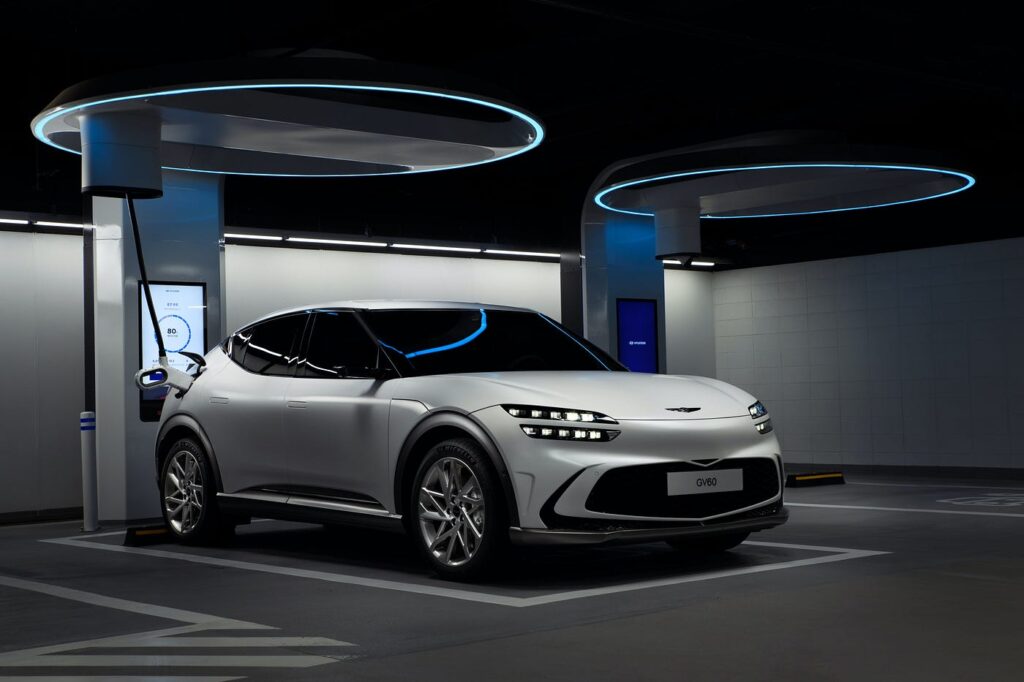
I still remember the first time I sat behind the wheel of a modern electric vehicle. It wasn’t just the silence that struck me, though the absence of engine rumble was profound. It was the feeling that the car was alive in a way my old gasoline sedan never was. When I tapped the accelerator, the response was instantaneous, but more importantly, the car seemed to anticipate my needs before I even articulated them. The climate control adjusted based on the sun’s position, the navigation rerouted itself around a traffic jam I couldn’t yet see, and the battery management system whispered promises of range that felt almost magical. That moment crystallized a shift that is happening right now under our noses. We are no longer just buying cars; we are adopting sophisticated, rolling computers powered by artificial intelligence.
The convergence of electric vehicles and AI represents perhaps the most significant transformation in transportation since the invention of the internal combustion engine. For over a century, cars were defined by their mechanical prowess—horsepower, torque, and cylinder count. Today, the defining characteristics are lines of code, neural networks, and data processing speeds. This isn’t merely an upgrade; it is a complete redefinition of what a vehicle can be and do. As someone who has spent years tracking the evolution of automotive technology, I can tell you that the software running these machines is doing far more than just playing music or making phone calls. It is managing energy with surgical precision, predicting maintenance issues before they occur, and slowly but surely learning how to drive better than any human ever could.
The Brain Behind the Battery
At the heart of every electric vehicle lies the battery pack, a complex assembly of thousands of individual cells. Managing this asset is where AI truly shines. In the early days of EVs, range anxiety was a very real barrier to adoption. Drivers feared being stranded with a dead battery because the estimated range on the dashboard was often a rough guess at best. Those days are fading fast thanks to advanced machine learning algorithms.
Modern EVs use AI to analyze a staggering array of variables in real-time. The software considers the driver’s historical behavior, current weather conditions, topography, traffic patterns, and even the age and health of the battery itself to calculate range with remarkable accuracy. It’s not just a static number; it’s a dynamic prediction that updates every second. If you start climbing a steep hill while facing a headwind, the car instantly recalculates your remaining miles and might even suggest slowing down slightly to ensure you make it to the next charger. This level of intelligent energy management is crucial for the widespread acceptance of electric mobility.
According to research from the U.S. Department of Energy, optimizing battery performance through smart software is key to extending the lifespan of EVs and reducing overall ownership costs. The AI doesn’t just monitor the battery; it actively protects it. By balancing the charge across individual cells and regulating temperature with pinpoint accuracy, the software prevents degradation that used to plague early lithium-ion batteries. This ensures that an EV bought today will likely hold its value and performance capabilities for many years to come, a fact that is reshaping the resale market and consumer confidence.
The Co-Pilot That Never Sleeps
While battery management happens under the hood, the most visible manifestation of AI in EVs is in the realm of driver assistance. We have moved far beyond simple cruise control. Today’s systems, often referred to as Advanced Driver Assistance Systems or ADAS, utilize a suite of cameras, radar, and lidar sensors to create a 360-degree view of the world around the car. But sensors alone are just eyes; AI is the brain that interprets what those eyes see.
Imagine driving on a foggy highway at night. Your human vision is limited, and your reaction time is bound by biology. An AI-powered EV, however, can detect a stalled vehicle hundreds of yards away, recognize the hazard, and begin slowing down or changing lanes before you even realize there is a problem. These systems are trained on millions of miles of driving data, allowing them to recognize patterns and anomalies that a human might miss. They can distinguish between a plastic bag blowing across the road and a child running into the street, making split-second decisions that prioritize safety.
The progress in this field is documented extensively by organizations like the National Highway Traffic Safety Administration, which tracks the deployment and safety implications of automated driving systems. While we are not yet at the point of fully autonomous robotaxis everywhere, the trajectory is clear. Every mile driven by these semi-autonomous systems feeds data back into the cloud, refining the algorithms and making the entire fleet smarter. It is a collective learning process where one car’s experience benefits millions of others. This continuous improvement loop is something traditional mechanical cars could never achieve. Once you buy a gas car, it is essentially frozen in time regarding its capabilities. An AI-driven EV, however, can receive over-the-air updates that improve its braking distance, enhance its lane-keeping abilities, or add entirely new features years after purchase.
The Personalization of Mobility
Beyond safety and efficiency, AI is bringing a level of personalization to driving that feels almost intuitive. Have you ever noticed how your favorite streaming service seems to know exactly what movie you want to watch next? EVs are beginning to offer that same level of tailored experience. The car learns your habits. It knows that you prefer the seat heated to level three on Tuesday mornings but level two on Fridays. It understands that you usually take a specific route to work but might want a scenic detour on weekends.
This personalization extends to the charging experience as well. Smart charging algorithms can analyze electricity grid demand and utility pricing to schedule charging during off-peak hours, saving the owner money without requiring any manual input. If you plug in your car at 6 PM but don’t need it until 7 AM, the AI will wait to draw power until rates are lowest, all while ensuring the battery is fully topped up by the time you wake up. This seamless integration of lifestyle and logistics removes the friction that often accompanies new technologies.
Furthermore, the interior of the vehicle is becoming a responsive environment. Voice assistants powered by natural language processing allow drivers to control complex functions without taking their hands off the wheel or eyes off the road. You can ask the car to find a coffee shop along your route that has open parking spots, and it will execute that command with context-aware understanding. This shift transforms the car from a mere tool of transport into a mobile command center that adapts to the human, rather than forcing the human to adapt to the machine.
Challenges on the Horizon
Despite the exhilarating progress, it would be dishonest to ignore the challenges that lie ahead. The marriage of EVs and AI introduces complex issues regarding data privacy, cybersecurity, and ethical decision-making. These vehicles generate terabytes of data daily, recording everything from location history to driving habits. Who owns this data? How is it protected? These are questions that regulators and manufacturers are grappling with right now.
Cybersecurity is another critical frontier. As cars become more connected, they become potential targets for malicious actors. A hacked vehicle is no longer just a privacy breach; it is a physical safety risk. The industry is responding with rigorous security protocols, but it remains an arms race between defenders and attackers. Resources from the Center for Automotive Research highlight the ongoing efforts to establish robust cybersecurity standards that protect consumers while enabling innovation.
There is also the ethical dimension of autonomous driving. In a scenario where an accident is unavoidable, how does the AI decide the course of action? These are not just technical problems but philosophical ones that require societal consensus. Transparency from manufacturers about how their algorithms make decisions is essential for building public trust. We must ensure that the development of this technology remains human-centric, prioritizing safety and equity above all else.
The Road Ahead
As we look to the future, the synergy between electric propulsion and artificial intelligence promises a transportation ecosystem that is cleaner, safer, and more efficient than anything we have known. Cities could become quieter and less polluted as EV fleets optimize their routes to reduce congestion. Commutes could transform from stressful ordeals into productive or relaxing intervals. The very concept of car ownership might evolve, with shared autonomous fleets providing mobility as a service, reducing the need for private parking and freeing up urban space for parks and community areas.
The transition won’t happen overnight, and there will be bumps in the road. However, the direction is undeniable. Software is eating the world, and it is definitely eating the automotive industry. For consumers, this means staying informed and embracing the learning curve. For society, it means preparing for a future where the relationship between humans and machines is deeper and more collaborative than ever before. The car of the future is not just a vehicle; it is a partner in motion, guided by the invisible hand of artificial intelligence.
Frequently Asked Questions
How does AI actually improve the range of an electric vehicle?
AI improves EV range by acting as a hyper-intelligent energy manager. It analyzes real-time data such as driving style, road gradient, wind speed, temperature, and traffic flow to optimize power delivery. Unlike older systems that provided static estimates, AI dynamically adjusts energy consumption, suggesting optimal speeds or pre-conditioning the battery to operate at peak efficiency. It also manages regenerative braking more effectively, capturing more energy during deceleration based on predictive路况 analysis.
Are self-driving features in current EVs safe to use?
Current self-driving features, typically classified as Level 2 or Level 3 automation, are designed to assist the driver, not replace them. When used according to manufacturer guidelines, they can significantly enhance safety by reducing human error, which is a leading cause of accidents. However, they require constant driver supervision. The systems can handle routine tasks like lane keeping and adaptive cruising, but they may struggle with unpredictable scenarios. Safety ultimately depends on the driver remaining engaged and ready to take control immediately.
Can my electric car get hacked, and what is being done to prevent it?
Like any connected device, EVs have vulnerabilities, and the risk of hacking is a legitimate concern for the industry. However, automakers employ military-grade encryption, secure boot processes, and intrusion detection systems to protect vehicle software. Furthermore, regulations are increasingly mandating strict cybersecurity standards. Manufacturers also release regular over-the-air security patches to address newly discovered threats, much like updating a smartphone. Staying current with software updates is the best defense for an owner.
Will AI make electric cars too expensive for the average buyer?
Initially, the advanced software and sensor suites do add to the cost of the vehicle. However, as technology matures and production scales up, these costs are dropping rapidly. Moreover, the long-term savings from improved battery longevity, optimized energy usage, and reduced maintenance needs help offset the upfront price. Additionally, the rise of software-defined vehicles allows manufacturers to offer subscription models or unlock features later, potentially lowering the initial purchase barrier.
How does over-the-air software updating work in EVs?
Over-the-air (OTA) updates allow manufacturers to send new software directly to the vehicle via a cellular or Wi-Fi connection. This process is similar to updating an app on your phone. The car downloads the update package, verifies its integrity, and installs it, often while parked and charging. These updates can fix bugs, improve performance, enhance safety features, or even add completely new functionalities like faster acceleration or improved autopilot capabilities, keeping the car current without a visit to the dealership.
Conclusion
The fusion of electric vehicles and artificial intelligence is not just a technological trend; it is a fundamental restructuring of how we move through the world. We are witnessing the dawn of an era where our vehicles are no longer passive machines but active, intelligent partners. From the way they meticulously manage every watt of energy to extend our range, to the way they vigilantly watch the road to keep us safe, the impact of software is pervasive and profound.
This journey requires us to be open-minded and adaptable. Embracing these changes means trusting in the data and the algorithms while remaining aware of our own role as responsible users. It involves staying informed about the capabilities and limitations of our vehicles and advocating for policies that ensure these technologies are developed ethically and securely. As we stand on the precipice of this new age, the road ahead looks brighter, cleaner, and infinitely smarter. The revolution is already here, humming quietly beneath the floorboards of the next car you pass on the street. The question is no longer if software will redefine transportation, but how quickly we will adapt to ride the wave of this incredible transformation. Take the time to explore the features of your current or future EV, understand the technology behind it, and prepare yourself for a future where driving is not just a necessity, but a seamlessly integrated, intelligent experience.