

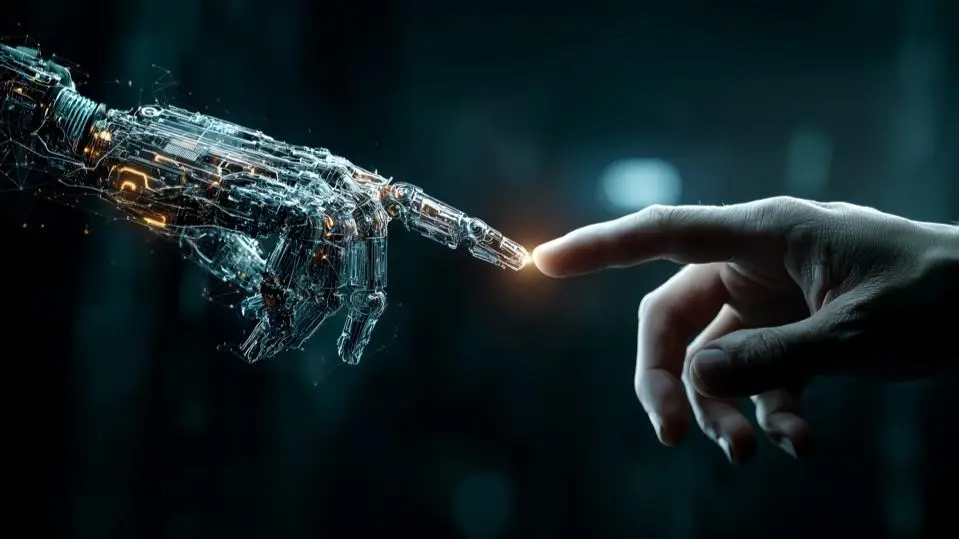
The landscape of modern conflict has shifted dramatically from the trenches of physical battlefields to the invisible, high-speed corridors of digital infrastructure. In this new era, the primary weapon is no longer solely the missile or the tank, but the algorithm. Artificial Intelligence (AI) has emerged as the decisive factor in cyber warfare, fundamentally altering how nations prepare for, execute, and defend against digital conflicts. The integration of machine learning and autonomous systems into national security strategies represents a paradigm shift that demands immediate attention from policymakers, security professionals, and the global public alike.
The speed at which digital threats evolve now outpaces human reaction times. Traditional cybersecurity measures, reliant on human analysts to identify patterns and patch vulnerabilities, are increasingly insufficient against adversaries leveraging automated attack vectors. Nations recognizing this disparity are investing heavily in AI-driven defense mechanisms, creating an arms race where the currency is data and the battlefield is the global network. Understanding the mechanics of this transformation is crucial for grasping the future of international stability and national sovereignty.
The Acceleration of Threats: AI as an Offensive Weapon
The adoption of AI by state-sponsored actors has lowered the barrier to entry for sophisticated cyberattacks while simultaneously increasing their potency. Historically, crafting a complex piece of malware required teams of highly skilled developers working for months. Today, generative AI models can assist in writing polymorphic code that changes its signature with every iteration, making detection by traditional antivirus software nearly impossible. This capability allows nation-states to deploy campaigns that are not only faster but also more adaptive to defensive measures in real-time.
One of the most concerning developments is the use of AI to automate vulnerability discovery. Machine learning algorithms can scan vast networks of code, identifying zero-day exploits—security flaws unknown to the software vendor—far more quickly than human researchers. Once identified, these vulnerabilities can be weaponized instantly. Reports from intelligence communities suggest that adversarial nations are already utilizing these tools to map critical infrastructure weaknesses in potential rival states, positioning themselves for rapid deployment in the event of geopolitical tension. The National Institute of Standards and Technology (NIST) has highlighted the urgency of addressing these automated discovery methods, noting that the window between vulnerability discovery and exploitation is shrinking to mere minutes.
Furthermore, AI enhances the precision of social engineering attacks, which remain a primary vector for breaching secure networks. Deepfake technology, powered by advanced neural networks, can generate convincing audio and video replicas of political leaders or corporate executives. These synthetic media assets are used to issue fraudulent commands, spread disinformation, or manipulate stock markets. The implications for command-and-control structures within military and government organizations are profound, as trust in digital communications becomes eroded. The Department of Homeland Security (DHS) has issued specific guidelines regarding the risks of synthetic media, emphasizing the need for robust verification protocols in high-stakes environments.
The scalability of AI-driven attacks also presents a unique challenge. Automated botnets, coordinated by central AI controllers, can launch distributed denial-of-service (DDoS) attacks of unprecedented magnitude. Unlike traditional botnets that rely on static scripts, AI-coordinated networks can dynamically adjust their attack patterns based on the defensive responses they encounter. If a firewall blocks a specific type of traffic, the AI can instantly reconfigure the attack vector to bypass the obstruction. This adaptive behavior renders static defense perimeters obsolete, forcing nations to rethink their entire architectural approach to network security. The Cybersecurity and Infrastructure Security Agency (CISA) regularly updates its alerts to reflect these evolving tactics, urging organizations to move beyond perimeter-based defenses.
The Defensive Shield: Autonomous Response Systems
In response to the escalating offensive capabilities, nations are deploying AI-driven defensive systems designed to operate at machine speed. The core philosophy behind these systems is “autonomous response.” When an attack is detected, the AI does not wait for human approval to initiate countermeasures; it acts immediately to isolate infected segments, patch vulnerabilities, or reroute traffic. This shift is necessary because the speed of modern cyberattacks often exceeds the cognitive processing speed of human operators. A delay of even a few seconds can result in the compromise of critical data or the shutdown of essential services.
Machine learning models are now trained on petabytes of network traffic data to recognize anomalous behavior that might indicate an intrusion. These systems establish a baseline of “normal” activity for a given network and flag deviations in real-time. For instance, if a server in a power grid suddenly begins transmitting data to an external IP address at an unusual time, the AI can identify this as a potential exfiltration attempt and sever the connection before significant damage occurs. The efficacy of these systems relies on continuous learning; as they encounter new threats, they update their models to improve future detection rates. The MITRE Corporation, a key developer of cybersecurity standards, maintains the ATT&CK framework which is increasingly being integrated with AI tools to map and predict adversary behaviors.
However, the deployment of autonomous defense systems introduces complex ethical and operational questions. The concept of “flash wars” in the cyber domain—where opposing AI systems interact at speeds incomprehensible to humans, potentially leading to rapid escalation—is a genuine concern. If two autonomous defense systems misinterpret each other’s protective maneuvers as aggressive acts, they could trigger a cascade of retaliatory actions without human intervention. To mitigate this, major military powers are exploring “human-in-the-loop” protocols for critical decisions, ensuring that while AI handles detection and containment, the decision to launch a counter-offensive remains under human control. The Brookings Institution has published extensive research on the governance of autonomous cyber weapons, advocating for international norms to prevent unintended escalation.
Another critical aspect of AI defense is predictive analytics. Rather than waiting for an attack to occur, nations are using AI to simulate thousands of potential attack scenarios to identify weak points in their infrastructure before adversaries do. These “digital twins” of national networks allow strategists to stress-test their defenses against hypothetical AI-driven assaults. By understanding how an adversary’s AI might attempt to breach a system, defenders can proactively reinforce those specific areas. This proactive stance shifts the paradigm from reactive incident response to anticipatory resilience. The World Economic Forum (WEF) frequently discusses the importance of such predictive capabilities in their global cybersecurity outlooks, framing them as essential for economic stability.
Strategic Doctrines and National Preparedness
The integration of AI into cyber warfare is not merely a technological upgrade; it is a strategic imperative that is reshaping national defense doctrines. Countries around the world are revising their military strategies to account for the dual-use nature of AI technologies. The same algorithms used to optimize logistics or manage power grids can be repurposed for offensive cyber operations. Consequently, nations are treating AI development as a matter of national security, akin to the nuclear programs of the 20th century. Investment in AI research is being funneled through defense departments, with strict controls on the export of sensitive dual-use technologies.
The United States, for example, has incorporated AI dominance into its National Defense Strategy, emphasizing the need to maintain a qualitative edge over potential adversaries. This involves not only developing superior algorithms but also securing the supply chain of hardware required to run them, such as advanced semiconductors. The restriction of chip exports to certain nations underscores the recognition that computational power is the fuel of modern cyber warfare. Similarly, China’s military-civil fusion strategy aims to leverage commercial AI advancements for defense purposes, blurring the lines between private sector innovation and state capability. The Council on Foreign Relations (CFR) provides detailed analysis on how these differing national strategies are influencing the global balance of power.
European nations are taking a slightly different approach, focusing heavily on regulation and ethical frameworks while still bolstering their defensive capabilities. The European Union’s AI Act seeks to categorize and regulate high-risk AI applications, including those used in critical infrastructure and defense. While this regulatory environment aims to prevent misuse, it also raises questions about the speed of innovation compared to less regulated competitors. NATO has responded by establishing a Cyber Defence Pledge, where member states commit to enhancing their national cyber defenses and sharing intelligence on AI-driven threats. The alliance recognizes that in a connected world, a breach in one member’s network can compromise the security of all. The NATO Cooperative Cyber Defence Centre of Excellence serves as a hub for this collaboration, conducting exercises that simulate complex AI-mediated conflict scenarios.
Preparation also extends to the workforce. The shortage of skilled cybersecurity professionals is a global issue, and AI is seen as both a solution and a complicating factor. While AI can automate routine tasks, freeing up humans for strategic analysis, it also requires a new breed of operator who understands both cybersecurity principles and machine learning mechanics. Nations are revamping their education systems and military training programs to produce experts capable of managing AI-augmented defense systems. This includes specialized courses on adversarial machine learning, where students learn how to poison enemy datasets or evade enemy detection algorithms. The SANS Institute, a leading provider of cybersecurity training, has expanded its curriculum to include these emerging topics, reflecting the industry’s shifting needs.
The Ethical and Legal Quagmire
As nations arm themselves with AI, the international community faces a significant vacuum in legal and ethical frameworks governing their use in conflict. Existing laws of war, such as the Geneva Conventions, were written long before the advent of autonomous digital agents. Applying these principles to cyber warfare is challenging enough; adding AI into the mix creates layers of ambiguity regarding accountability and proportionality. If an autonomous AI system launches a cyberattack that inadvertently shuts down a hospital’s power grid, causing loss of life, who is responsible? The programmer, the commanding officer, or the state itself?
The principle of distinction, which requires combatants to distinguish between military targets and civilians, is difficult to enforce when algorithms make targeting decisions. While AI can theoretically be more precise than humans in identifying specific network nodes, the interconnected nature of modern infrastructure means that collateral damage is often inevitable. A cyberattack on a financial server could ripple through the economy, affecting pension funds and small businesses unrelated to the conflict. Ensuring that AI systems adhere to international humanitarian law requires rigorous testing and validation, yet the proprietary nature of military AI makes external verification nearly impossible. The International Committee of the Red Cross (ICRC) has been vocal about these risks, calling for new international treaties specifically addressing autonomous cyber capabilities.
Moreover, the opacity of deep learning models, often referred to as the “black box” problem, complicates legal accountability. Even the developers of an AI system may not fully understand why it made a specific decision in a complex environment. If a nation cannot explain the decision-making process of its cyber weapon, it becomes difficult to argue that the weapon was used in compliance with legal standards. This lack of explainability undermines trust and increases the risk of miscalculation during crises. Legal scholars and ethicists are urging for the development of “explainable AI” (XAI) for military applications, ensuring that autonomous systems can provide a rationale for their actions that humans can audit.
There is also the looming threat of an AI arms race leading to instability. Just as the nuclear arms race led to the doctrine of Mutually Assured Destruction (MAD), some theorists propose that widespread adoption of AI cyber weapons could lead to a form of “Digital MAD,” where nations hesitate to strike first due to the fear of overwhelming, automated retaliation. However, unlike nuclear weapons, cyber tools are harder to detect and attribute, which may encourage aggression rather than deterrence. The anonymity provided by AI-driven attacks allows states to engage in hostile activities below the threshold of open war, creating a zone of persistent conflict that is difficult to resolve diplomatically. The United Nations Institute for Disarmament Research (UNIDIR) is currently facilitating dialogues among member states to explore confidence-building measures in this domain.
Comparative Analysis of National Cyber Postures
To understand the global landscape of AI in cyber warfare, it is useful to compare how different major powers are approaching the integration of these technologies. Each nation brings its own strategic culture, technological base, and regulatory environment to the table, resulting in distinct postures.
| Feature | United States | China | Russia | European Union |
|---|---|---|---|---|
| Primary Strategy | Innovation-led dominance; public-private partnership. | Military-Civil Fusion; state-directed resource allocation. | Asymmetric warfare; disruption and information control. | Regulatory leadership; collective defense via NATO/EU. |
| AI Focus | Advanced autonomy, predictive analytics, and cloud integration. | Surveillance, social control, and large-scale data processing. | Hybrid warfare, disinformation campaigns, and legacy system exploitation. | Privacy-preserving AI, critical infrastructure protection, and ethics. |
| Offensive Posture | High capability; emphasis on precision and stealth. | Rapidly expanding; focus on intellectual property theft and pre-positioning. | Aggressive; willingness to disrupt critical services for geopolitical leverage. | Primarily defensive; offensive capabilities held within NATO framework. |
| Defensive Posture | Zero Trust Architecture; automated response systems (Project Maven). | Great Firewall evolution; centralized monitoring and rapid censorship. | Sovereign internet initiatives; isolationist tendencies. | GDPR-compliant security; cross-border information sharing. |
| Key Vulnerability | Reliance on complex supply chains and legacy infrastructure. | Dependence on foreign semiconductor technology (though decreasing). | Outdated digital infrastructure in non-military sectors. | Fragmented national policies and slower procurement processes. |
| International Stance | Advocates for “responsible AI” but retains offensive flexibility. | Promotes “cyber sovereignty”; resists external interference. | Rejects Western norms; promotes alternative governance models. | Pushes for binding international treaties and ethical standards. |
This table illustrates that while the technology is universal, the application is deeply influenced by national objectives. The U.S. leverages its robust private sector to drive innovation, whereas China utilizes state mechanisms to direct AI development toward specific strategic goals. Russia focuses on cost-effective asymmetric tools to punch above its weight class, and the EU prioritizes normative power and regulatory influence. Understanding these distinctions is vital for predicting how conflicts might unfold and where the friction points will lie. The Center for Strategic and International Studies (CSIS) offers further breakdown of these national strategies, providing data-driven insights into the shifting balance of cyber power.
Future Trajectories and the Path Forward
Looking ahead, the trajectory of AI in cyber warfare points toward increasingly autonomous and intelligent systems. The next generation of cyber weapons will likely possess the ability to learn from their failures in real-time, adapting to defenses without human input. We may see the emergence of “swarm” tactics, where thousands of small, AI-driven agents coordinate to overwhelm a target, similar to drone swarms in the physical domain but operating entirely within digital networks. The resilience of national infrastructures will depend on the ability to detect and neutralize these swarms before they can coalesce into a devastating force.
Quantum computing represents another horizon that intersects with AI and cyber warfare. While still in its nascent stages, quantum computers promise to break current encryption standards, rendering many existing security protocols obsolete. Nations are already preparing for this “Q-Day” by developing post-quantum cryptography. AI will play a crucial role in this transition, helping to design new encryption algorithms and manage the massive complexity of upgrading global digital infrastructure. The race to achieve quantum supremacy is, in essence, a race to control the future of secure communication. The Association for Computing Machinery (ACM) publishes cutting-edge research on the intersection of quantum computing and cybersecurity, highlighting the urgent need for preparation.
Collaboration between the public and private sectors will become even more critical. Since the majority of critical infrastructure is owned and operated by private entities, governments cannot secure the nation alone. Information sharing mechanisms must be streamlined, allowing threat intelligence to flow freely between tech giants, utility companies, and intelligence agencies. AI platforms that facilitate this sharing, while preserving privacy and proprietary secrets, will be essential. Trust is the foundation of this collaboration, and building it requires transparency and shared incentives.
Ultimately, the goal is not to eliminate conflict but to manage it in a way that prevents catastrophic outcomes. The development of international norms and treaties specific to AI in cyber warfare is a necessary step. Just as the world came together to ban chemical and biological weapons, a global consensus on the limits of autonomous cyber capabilities is needed. This includes bans on targeting civilian infrastructure, requirements for human oversight in lethal or destructive decisions, and protocols for attribution and accountability. The path forward requires a blend of technological innovation, strategic foresight, and diplomatic engagement.
Frequently Asked Questions
1. Can AI completely replace human analysts in cyber warfare?
No, AI cannot completely replace human analysts. While AI excels at processing vast amounts of data, identifying patterns, and executing rapid responses, it lacks the contextual understanding, ethical judgment, and strategic intuition that humans possess. Complex decision-making, particularly regarding escalation and attribution, still requires human oversight. The current model is “human-machine teaming,” where AI handles the speed and scale, and humans handle the strategy and ethics.
2. What is the biggest risk associated with autonomous cyber weapons?
The primary risk is unintended escalation, often referred to as a “flash war.” If two autonomous systems interact aggressively without human intervention, they could escalate a minor incident into a major conflict within seconds. Additionally, there is the risk of algorithmic bias or errors leading to attacks on civilian infrastructure, which would violate international humanitarian law. The lack of explainability in deep learning models also makes it difficult to audit these systems for compliance.
3. How are nations protecting against AI-generated deepfakes?
Nations are employing a multi-layered approach to combat deepfakes. This includes developing detection algorithms that can identify artifacts in synthetic media, implementing digital watermarking and signing standards for official communications, and educating the public and personnel on media literacy. Legislative measures are also being introduced to criminalize the malicious use of deepfakes in political and military contexts.
4. Will AI make cyberattacks cheaper and more accessible?
Yes, AI lowers the barrier to entry for sophisticated cyberattacks. Tools that previously required expert knowledge can now be automated, allowing less skilled actors to launch potent attacks. This democratization of cyber capability increases the volume of threats that nations must defend against. However, developing state-of-the-art offensive AI still requires significant resources, keeping the most advanced capabilities in the hands of major powers.
5. What is “Zero Trust” architecture and how does AI enhance it?
Zero Trust is a security model that assumes no user or system, inside or outside the network, is trustworthy by default. Every access request must be verified. AI enhances Zero Trust by continuously analyzing user behavior and device health to make dynamic access decisions. Instead of static rules, AI can detect subtle anomalies that indicate a compromised credential or device, adjusting access privileges in real-time to contain potential breaches.
6. How does quantum computing threaten current cybersecurity?
Quantum computers have the potential to solve mathematical problems that underpin current encryption standards (like RSA and ECC) exponentially faster than classical computers. This means they could decrypt sensitive communications and stored data that are currently considered secure. Nations are preparing by transitioning to post-quantum cryptography algorithms that are resistant to quantum attacks, a process that AI is helping to accelerate.
7. Are there any international laws specifically governing AI in cyber warfare?
Currently, there are no binding international treaties specifically dedicated to AI in cyber warfare. Existing international law, such as the UN Charter and the Geneva Conventions, applies to cyberspace, but their application to autonomous AI systems is subject to interpretation. Various organizations, including the UN and ICRC, are actively discussing the need for new frameworks to address the unique challenges posed by autonomous cyber capabilities.
8. What role does the private sector play in national cyber defense?
The private sector plays a pivotal role as it owns and operates the majority of critical infrastructure, including energy grids, financial systems, and telecommunications networks. Tech companies also develop the AI tools used by both defenders and attackers. Effective national defense requires robust public-private partnerships, where threat intelligence is shared, and joint exercises are conducted to ensure a coordinated response to major cyber incidents.
Conclusion
The integration of Artificial Intelligence into cyber warfare marks a definitive turning point in the history of conflict. It is a transformation that transcends mere technological advancement, reshaping the strategic, ethical, and operational dimensions of national security. As nations race to develop superior algorithms and autonomous systems, the digital domain has become the primary arena for geopolitical competition. The speed, scale, and sophistication that AI brings to both offense and defense have rendered traditional security paradigms inadequate, necessitating a fundamental rethinking of how societies protect their critical infrastructure and democratic institutions.
The path forward is fraught with challenges, from the risk of unintended escalation to the complexities of legal accountability. Yet, it also offers opportunities for enhanced resilience and more precise defense mechanisms. The ultimate outcome of this digital arms race will not be determined solely by the sophistication of the code, but by the wisdom of the strategies employed and the strength of the international norms established. Nations that can effectively balance innovation with responsibility, and autonomy with human oversight, will be best positioned to navigate this volatile landscape.
For the global community, the imperative is clear: collaboration and dialogue must keep pace with technological development. Siloed approaches to AI security are destined to fail in an interconnected world. By fostering trust, sharing intelligence, and working toward common standards, the international community can mitigate the risks of AI-driven cyber warfare while harnessing its potential for good. The silent frontline of digital conflict demands vigilance, adaptability, and a unwavering commitment to the principles of stability and peace. The future of global security depends on the choices made today in the realm of algorithms and data.