

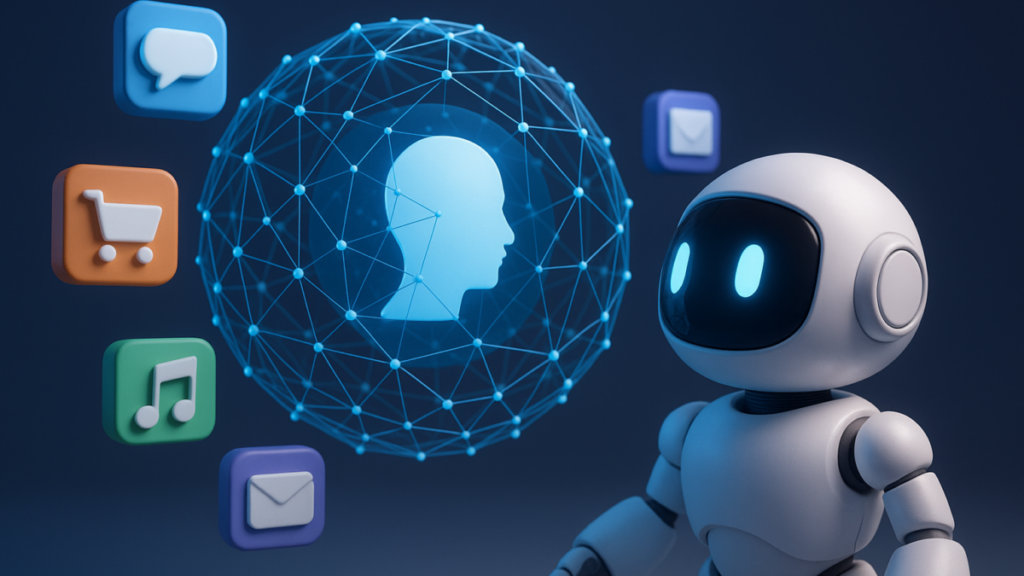
The digital landscape is undergoing a seismic shift that rivals the transition from desktop computers to smartphones. For over a decade, the smartphone ecosystem has been defined by the “app economy,” a model where users must locate, download, and navigate specific applications to complete discrete tasks. Whether booking a ride, ordering food, or managing finances, the workflow requires jumping between siloed interfaces, each with its own login credentials, design language, and learning curve. However, a new paradigm is emerging that promises to dismantle this fragmented experience. Enter the AI agent: an autonomous digital assistant capable of reasoning, planning, and executing complex workflows across multiple services without direct human intervention for every step. This evolution marks the beginning of the end for the traditional app-centric model, replacing static tools with dynamic, intent-driven partners.
From Static Tools to Dynamic Partners
The fundamental difference between a traditional application and an AI agent lies in the locus of control. In the current app ecosystem, the user acts as the integrator. A person wanting to plan a weekend getaway must open a weather app, check a maps application for traffic, switch to a hotel booking site, and then use a separate calendar tool to schedule the trip. Each step requires manual input and context switching. The cognitive load rests entirely on the user to bridge the gaps between these isolated services. Stanford University’s Human-Centered AI Institute has extensively documented how this fragmentation creates friction, reducing overall productivity and increasing the time required to complete multi-step objectives.
AI agents invert this model. Instead of waiting for specific commands within a confined interface, an agent operates on high-level intent. When a user states, “Plan a weekend getaway to the mountains under $500,” the agent decomposes this request into sub-tasks. It queries weather databases, scans inventory across multiple hotel and rental platforms, analyzes traffic patterns, and cross-references the user’s calendar availability. Crucially, it performs these actions autonomously, negotiating between services to find the optimal solution. This capability transforms the digital assistant from a passive command executor into an active problem solver. Research from MIT Technology Review highlights that this shift from reactive tools to proactive agents represents the most significant change in human-computer interaction since the introduction of the graphical user interface.
The underlying technology enabling this shift is the advancement in Large Language Models (LLMs) combined with function calling capabilities. Early voice assistants were limited to rigid, pre-programmed scripts; they could only respond to specific triggers they were trained to recognize. Modern agents, however, utilize reasoning engines that allow them to understand context, handle ambiguity, and recover from errors. If a hotel is fully booked, an agent does not simply report failure; it reasons that an alternative location or date might satisfy the original intent and proposes a viable alternative. This level of adaptability is what distinguishes a chatbot from a true autonomous agent. The Association for Computing Machinery (ACM) notes that the ability of these systems to chain together multiple API calls logically is the technical breakthrough making the “app-less” future possible.
The Mechanics of Autonomy: How Agents Operate
Understanding how AI agents replace apps requires a look under the hood at their operational architecture. Unlike an app, which is a walled garden containing specific features, an agent is a universal interface that connects to the APIs of countless services. The agent does not “contain” the booking engine; it accesses it. This decoupling of the interface from the service logic is the key to their versatility. When an agent interacts with a third-party service, it uses standardized protocols to read data and execute actions, effectively treating every website and database as a potential tool in its toolkit. The World Wide Web Consortium (W3C) has been instrumental in developing standards that facilitate this interoperability, ensuring that agents can securely and reliably interact with diverse web resources.
The process typically begins with intent recognition, where the agent parses natural language to determine the user’s goal. Once the goal is established, the agent engages in a planning phase. It breaks the high-level goal into a sequence of logical steps, often creating a dependency tree where step B cannot occur until step A is successful. For instance, one cannot book a flight before confirming the destination dates. During execution, the agent iterates through these steps, making real-time decisions based on the feedback received from external APIs. If an API returns an error or unexpected data, the agent’s reasoning module recalibrates the plan rather than crashing. This resilience is critical for handling the unpredictability of the real world. Insights from Google DeepMind demonstrate how reinforcement learning techniques are being applied to help agents optimize these decision trees over time, learning from past successes and failures to improve future performance.
Security and permission management form another critical pillar of agent mechanics. In an app-based world, users grant broad permissions to each application individually, often leading to “permission fatigue” where users blindly accept access requests. In an agent-centric model, the agent acts as a trusted intermediary. The user grants the agent permission to act on their behalf, and the agent manages the granular access tokens required for specific transactions. This centralization of trust reduces the attack surface, as individual services do not need to store persistent user data beyond the immediate transaction. The National Institute of Standards and Technology (NIST) has published guidelines on AI risk management that emphasize the importance of such centralized governance frameworks to ensure that autonomous actions remain aligned with user safety and privacy expectations.
Furthermore, agents possess a form of memory that allows for continuity across sessions. While traditional apps reset their state when closed, agents maintain a contextual understanding of user preferences, past interactions, and long-term goals. This persistent memory enables the agent to anticipate needs. If a user frequently orders coffee on Tuesday mornings, the agent learns this pattern and can suggest placing the order proactively or even execute it automatically based on predefined constraints. This shift from explicit instruction to implicit anticipation changes the nature of digital assistance. According to studies published by IEEE Spectrum, the integration of vector databases for long-term memory retention is what allows these systems to move beyond single-turn interactions into sustained, collaborative relationships with users.
The Economic and UX Shift: Why Apps Are Becoming Obsolete
The rise of AI agents signals a profound disruption to the business models that have powered the tech industry for the last fifteen years. The app economy relies on user acquisition costs, screen real estate, and engagement metrics. Companies spend billions convincing users to download their specific application and keep it installed. However, in an agent-driven future, the “interface” becomes commoditized. If a user can book a ride, order food, and pay bills through a single conversational interface, the incentive to download and open twenty different apps diminishes rapidly. The value shifts from owning the customer’s attention on a home screen to providing the best backend service that an agent can access. Harvard Business Review analyzes this trend, suggesting that companies will soon compete on the quality of their API and the reliability of their data rather than the slickness of their mobile UI.
From a user experience (UX) perspective, the elimination of app friction offers immense benefits. The current model forces users to adapt to the software; they must learn where buttons are located, how menus are structured, and how to navigate complex settings. This creates a barrier to entry for non-technical users and slows down power users. Agents remove this barrier by allowing users to interact in natural language, the most intuitive interface humans possess. There is no learning curve for a new service because the interaction model remains constant: describe the need, and the agent handles the rest. This democratization of access is particularly powerful for complex domains like finance or healthcare, where navigating specialized apps can be daunting. The Nielsen Norman Group, a leader in UX research, argues that conversational interfaces powered by agentic AI represent the ultimate reduction of cognitive load, streamlining digital interactions to their purest form.
Moreover, the economic implications extend to discovery and marketing. Currently, app stores function as gatekeepers, charging fees and controlling visibility. An agent-based ecosystem disrupts this by changing how services are discovered. Instead of browsing an app store, users express a need, and the agent selects the best service provider based on price, rating, speed, or user preference. This shifts the power dynamic from platform owners to service providers who offer the best value. A restaurant with excellent food but a poorly designed app might lose out in the current system; in an agent system, if their menu data is accessible and their pricing is competitive, the agent will recommend them just as readily as a tech giant’s proprietary service. Forbes has noted that this could lead to a renaissance for small businesses that were previously marginalized by the high costs of app development and marketing.
The environmental impact of this shift is also worth considering. The proliferation of apps leads to significant redundancy in code, data storage, and background processes that drain battery life and consume server resources. Each app maintains its own update cycle, security patches, and data caches. Consolidating these functions into a unified agent layer reduces the overall computational overhead on devices and networks. By centralizing logic and minimizing the need for redundant local installations, the agent model promotes a more efficient digital infrastructure. Reports from the International Energy Agency (IEA) regarding the energy consumption of digital technologies suggest that optimizing software architecture through aggregation could play a role in reducing the carbon footprint of the global IT sector.
Real-World Applications and Industry Transformations
The theoretical potential of AI agents is already manifesting in tangible transformations across various industries. In the realm of customer support, the traditional model of ticketing systems and call centers is being upended. Instead of navigating phone trees or waiting for email responses, customers interact with agents that can resolve issues end-to-end. These agents can access order history, process refunds, reschedule deliveries, and troubleshoot technical problems without human escalation. This is not merely a chatbot answering FAQs; it is an autonomous worker executing transactions. Companies adopting this approach report significant reductions in resolution times and operational costs. The Gartner research firm predicts that by the near future, a substantial percentage of customer service interactions will be handled entirely by autonomous agents, freeing human employees to focus on complex, high-value problem-solving.
In the healthcare sector, the impact of agents is equally profound but carries higher stakes. Administrative burdens have long plagued medical professionals, with doctors spending hours on electronic health records (EHR) and insurance authorizations. AI agents are beginning to automate these workflows. They can transcribe patient visits, code diagnoses for billing, check insurance coverage in real-time, and schedule follow-up appointments based on clinical guidelines. This allows medical practitioners to focus on patient care rather than paperwork. Furthermore, patient-facing agents can monitor chronic conditions, remind users to take medication, and alert healthcare providers if vital signs deviate from normal ranges. The Mayo Clinic and other leading institutions are actively exploring these technologies to enhance care delivery while maintaining strict adherence to privacy regulations like HIPAA.
The financial services industry is also witnessing a radical overhaul through agentic AI. Traditional banking apps require users to manually track expenses, categorize transactions, and initiate transfers. AI agents, however, can act as personal financial advisors. They analyze spending patterns, identify subscription creep, negotiate better rates on bills, and automatically allocate funds to savings or investment accounts based on personalized goals. These agents can execute trades, rebalance portfolios, and file tax documents with a level of precision and speed unattainable by human users. The autonomy here is critical; the agent doesn’t just suggest saving money; it moves the money. Regulatory bodies like the Securities and Exchange Commission (SEC) are closely monitoring these developments to ensure that autonomous financial actions remain transparent and accountable, balancing innovation with consumer protection.
Even in creative and professional workflows, agents are replacing the need for suites of disjointed software tools. A marketing professional no longer needs to switch between a graphic design tool, a copywriting platform, a social media scheduler, and an analytics dashboard. An integrated agent can generate content, create visuals, schedule posts across platforms, and analyze performance metrics, adjusting the strategy in real-time based on engagement data. This holistic approach accelerates production cycles and enhances consistency. The efficiency gains are driving rapid adoption in enterprise environments, where the cost of software fragmentation is highest. McKinsey & Company estimates that generative AI and autonomous agents could add trillions of dollars in value to the global economy by automating these complex knowledge-work tasks.
Comparative Analysis: Traditional Apps vs. AI Agents
To fully grasp the magnitude of this transition, it is helpful to directly compare the characteristics of the legacy app model against the emerging agent framework. The differences span usability, functionality, development, and user empowerment.
| Feature | Traditional App Model | AI Agent Model |
|---|---|---|
| Interaction Mode | Graphical User Interface (GUI); requires tapping, swiping, and navigating menus. | Natural Language & Intent; requires describing goals in plain text or voice. |
| Scope of Action | Siloed; limited to functions within the specific app. | Universal; can orchestrate actions across multiple apps and services simultaneously. |
| User Effort | High; user must manage context switching and integrate data manually. | Low; agent handles planning, execution, and integration autonomously. |
| Adaptability | Static; features are fixed until the developer releases an update. | Dynamic; adapts to new situations and unforeseen errors in real-time. |
| Discovery | App Store search; dependent on keywords and rankings. | Intent-based; agent selects best service based on user preferences and context. |
| Data Continuity | Fragmented; data trapped within individual app databases. | Unified; agent maintains a holistic memory of user history across all domains. |
| Development Focus | Building engaging UIs and retaining screen time. | Optimizing APIs, data accuracy, and reliability for machine consumption. |
| Error Handling | Rigid; often results in crash messages or dead ends. | Resilient; attempts alternative paths or asks clarifying questions. |
| Accessibility | Varies by app; requires learning specific interfaces. | Consistent; one interface works for all tasks, lowering barriers to entry. |
| Privacy Model | Decentralized permissions; each app requests broad access. | Centralized governance; user trusts the agent to manage granular access tokens. |
This table illustrates that the shift is not merely an incremental improvement but a fundamental restructuring of how digital services are consumed. The agent model resolves the inefficiencies inherent in the app economy, offering a streamlined, intelligent, and user-centric alternative. As these systems mature, the friction associated with the old model will become increasingly unacceptable to users accustomed to the fluidity of autonomous assistance.
Navigating Challenges and Ethical Considerations
Despite the transformative potential of AI agents, their widespread adoption is not without significant challenges. Trust is the primary hurdle. Handing over autonomous control to a digital entity requires a leap of faith. Users must be confident that the agent will not make costly errors, leak sensitive information, or act against their best interests. The “black box” nature of some AI decision-making processes complicates this, as it can be difficult to understand why an agent made a specific choice. Establishing explainability and accountability mechanisms is therefore paramount. Developers must ensure that agents can articulate their reasoning and provide audit trails for their actions. The Partnership on AI emphasizes the need for transparent AI systems that allow users to verify and override autonomous decisions, fostering a relationship of trust rather than blind reliance.
Security risks also evolve in an agent-centric world. While centralizing control can reduce the attack surface, it also creates a high-value target. If a malicious actor compromises the central agent, they could potentially gain access to a user’s entire digital life, from bank accounts to smart home controls. Robust authentication methods, such as biometric verification for high-stakes actions, and advanced encryption standards are essential safeguards. Furthermore, the interconnectivity of agents introduces the risk of cascading failures or unintended interactions between different services. Rigorous testing and sandboxing environments are necessary to ensure stability. Cybersecurity experts at SANS Institute warn that the security community must pivot from securing individual applications to securing the orchestration layers that agents rely upon.
There are also broader societal implications regarding employment and economic displacement. As agents become capable of performing complex cognitive tasks, the demand for certain types of labor may decrease. Roles centered around data entry, basic customer support, and routine administrative coordination are particularly vulnerable. While history suggests that technology creates new jobs even as it displaces old ones, the transition period can be disruptive. Society must prepare for this shift through education and workforce development programs that focus on skills complementary to AI, such as strategic thinking, creativity, and emotional intelligence. The World Economic Forum regularly publishes insights on the future of work, highlighting the need for proactive policy measures to manage the economic transition driven by automation.
Finally, the issue of bias and fairness remains critical. Agents learn from vast datasets that may contain historical biases. If left unchecked, an agent could perpetuate or even amplify these biases in its decision-making, such as favoring certain vendors over others or providing unequal service recommendations. Ensuring that training data is representative and that algorithms are audited for fairness is an ongoing responsibility for developers and regulators alike. Ethical AI frameworks must be embedded into the development lifecycle to prevent discriminatory outcomes. The Algorithmic Justice League advocates for rigorous testing and diverse development teams to mitigate these risks, ensuring that the benefits of AI agents are distributed equitably across all demographics.
Frequently Asked Questions
What exactly is an AI agent compared to a chatbot?
While both use natural language processing, a chatbot is generally limited to answering questions or following pre-scripted flows within a specific context. An AI agent, conversely, possesses agency; it can perceive its environment, reason about goals, plan a sequence of actions, and execute those actions by interacting with external tools and APIs to achieve a result without constant human hand-holding.
Will I still need to download apps in the future?
Likely not in the traditional sense. While the backend services (the “brains” of the companies) will still exist, the frontend interface for the average user will likely consolidate into one or two primary agent interfaces. You may not need to install a specific airline app to book a flight; your personal agent will communicate directly with the airline’s system to secure the ticket.
How do AI agents handle privacy and data security?
Reputable AI agents operate on a principle of least privilege, accessing only the data necessary for a specific task and using encrypted tokens for transactions. Many systems are designed so that the agent acts as a firewall, preventing third-party services from storing unnecessary personal data. However, users should always verify the security certifications and privacy policies of the agent provider they choose.
Can AI agents make mistakes, and who is liable?
Yes, AI agents can make mistakes, particularly if given ambiguous instructions or if external data sources are incorrect. Liability is a complex legal area currently evolving. Generally, the terms of service of the agent provider will define liability limits, but there is a growing push for regulatory frameworks that hold developers accountable for negligent design while protecting users from unauthorized financial loss.
Do AI agents work offline?
Currently, most advanced AI agents require cloud connectivity to access the massive computational power needed for reasoning and to interact with live web services. However, edge computing advancements are enabling smaller, localized models to handle basic tasks offline, with synchronization occurring once connectivity is restored.
How will this affect small businesses?
Small businesses that optimize their digital presence for machine readability (via robust APIs and structured data) will thrive, as agents will easily be able to recommend and transact with them. Those relying solely on a complex, app-based customer journey may find themselves invisible to the new agent-driven discovery mechanisms.
Is technical knowledge required to use an AI agent?
No. One of the primary advantages of AI agents is the democratization of technology. They are designed to understand natural language, meaning anyone who can speak or type a request can utilize powerful digital capabilities without needing to understand the underlying software mechanics.
What happens if an agent gets stuck in a loop or fails a task?
Advanced agents are equipped with self-correction mechanisms. If a specific path fails, they will attempt an alternative approach. If they cannot resolve the issue, they are programmed to escalate the matter to a human user or a human support agent, providing a summary of what was attempted to facilitate a quick resolution.
The Path Forward: Embracing the Autonomous Future
The transition from an app-centric world to one dominated by AI agents is not a distant sci-fi fantasy; it is an unfolding reality reshaping the digital infrastructure of daily life. This shift promises to liberate users from the tyranny of fragmented interfaces, replacing the tedious management of dozens of applications with the seamless efficiency of a single, intelligent partner. The value proposition is clear: reduced cognitive load, increased productivity, and a more intuitive interaction with technology. As agents become more sophisticated, reliable, and secure, the friction of the current digital experience will seem increasingly archaic.
However, realizing this future requires more than just technological advancement; it demands a commitment to ethical development, robust security, and thoughtful regulation. Stakeholders across the industry—from developers and policymakers to business leaders and consumers—must collaborate to build an ecosystem where autonomy serves humanity without compromising safety or privacy. The organizations that succeed in this new era will be those that prioritize transparency, reliability, and user empowerment over mere engagement metrics.
For the individual user, the advice is to remain curious and informed. Experimenting with early agentic tools, understanding their capabilities and limitations, and advocating for strong privacy standards will help shape the trajectory of this technology. The future of digital interaction is not about staring at screens and tapping icons; it is about articulating intentions and having them realized effortlessly. As we stand on the brink of this new chapter, the promise is a digital world that works for us, rather than one we must constantly work to navigate. The age of the app is waning, and the age of the agent has arrived, bringing with it the potential for a more fluid, intelligent, and human-centric digital existence.