
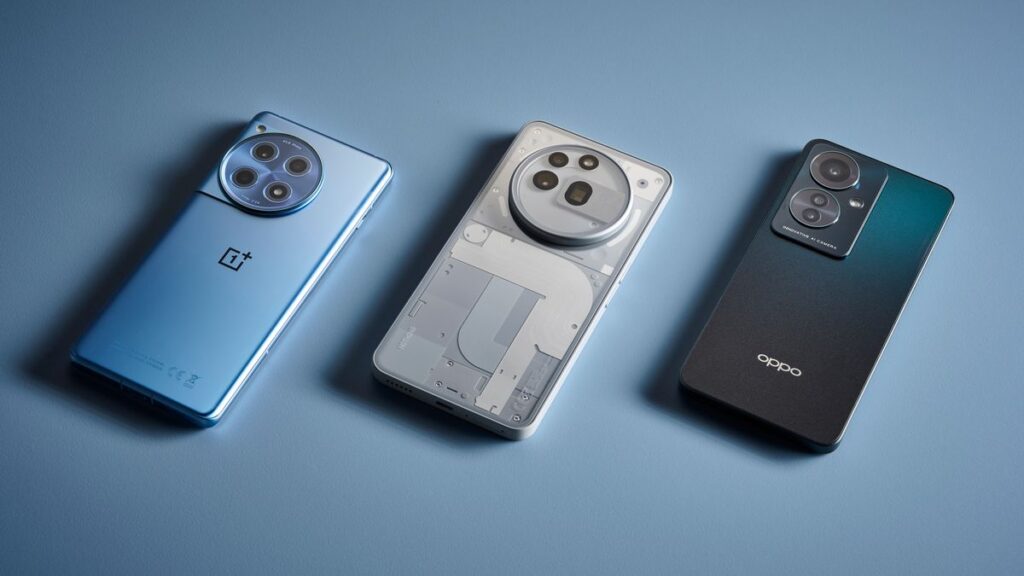
Flagship phones crossed the $1,200 mark in 2025. Some even brushed $1,500. And yet, a growing majority of smartphone buyers are making the perfectly rational decision to spend a fraction of that — and ending up with devices that genuinely impress. If you’re shopping for a smartphone in 2026 and your budget tops out around $300, you’re not settling. You’re being smart.
The sub-$300 market has undergone a quiet revolution over the past few years. Better chipsets, AMOLED displays, multi-day batteries, 5G connectivity, and computational cameras that once defined mid-range and premium territory have all migrated downward. The result is a segment that delivers real value, not compromised experience. This guide breaks down the best budget smartphones under $300 in 2026, what to look for before buying, and how to match your choice to how you actually live and work.
Why the $300 Budget Phone Category Is Better Than Ever
To understand just how much has changed, consider what a $300 phone looked like four years ago: slow processors, mediocre cameras, plastic builds that felt hollow, and software support measured in months rather than years. Today, the gap between budget and premium smartphones has never been smaller. A $280 phone in 2026 commonly comes with a 120Hz AMOLED display, a 50MP primary camera with optical image stabilization, a 5,000mAh battery with fast charging, and 5G connectivity. That would have been a respectable mid-range spec sheet just two years ago.
Several forces drove this shift. Chipmaker competition intensified, with Qualcomm’s Snapdragon 4-series and MediaTek’s Dimensity lineup pushing capable silicon into lower price bands. Display manufacturing at scale brought AMOLED costs down significantly. And brands like Motorola, Samsung, OnePlus, and Google learned that software experience and long-term update commitments could become genuine differentiators even at the budget tier. For buyers, this convergence is a win — but it also makes choices harder. With so many capable devices in this range, the decision comes down to nuanced tradeoffs, and understanding those tradeoffs is what separates a good purchase from a great one.
What to Look For Before You Buy
Before diving into specific recommendations, it helps to know what actually matters in this price category and what you can afford to overlook.
Processor and RAM are the foundation of daily feel. Most phones in this range use MediaTek Dimensity 700/1200 or Qualcomm Snapdragon 4 Gen 2 chips. Both handle daily tasks, streaming, social media, and light gaming competently. Phones with 8GB of RAM will multitask more smoothly than those offering just 4GB — a meaningful difference if you keep many apps open simultaneously.
Display quality shapes every interaction with the phone. An AMOLED panel with a 120Hz refresh rate is the gold standard. AMOLED produces deeper blacks, more vivid colors, and better outdoor visibility than LCD. The 120Hz refresh rate makes scrolling and animations noticeably smoother. Not every phone under $300 offers both — some cut corners with 90Hz or LCD panels, and it’s worth verifying before purchasing.
Battery and charging define daily anxiety levels more than almost any other spec. A 5,000mAh battery is essentially the floor in this category in 2026. What varies significantly is charging speed. Some phones top out at 18W; others, like the OnePlus Nord series, include 50W or 67W fast charging, which refills the battery in under an hour. If you frequently forget to charge overnight, faster charging is a practical feature, not a luxury.
Camera quality is easy to overstate in marketing. A 108MP sensor sounds impressive, but pixel count alone doesn’t determine photo quality. What matters more is aperture size, image processing software, and optical image stabilization. According to Google’s AI research, computational photography — the software-driven approach to image enhancement — consistently delivers results that pure hardware cannot. That’s why Pixel phones punch above their weight class despite modest sensors.
Software support is arguably the most underappreciated factor in a budget phone purchase. A phone with three years of OS updates and five years of security patches will stay usable and secure far longer than one abandoned after one update. Android security bulletins matter more than most users realize until a phone stops receiving them. Samsung’s Galaxy A-series commits to four major Android updates and five years of security patches — a commitment that reframes the value equation considerably.
5G connectivity is increasingly standard even below $300 in 2026. If your carrier has deployed 5G, prioritizing a 5G-capable device is a future-proofing decision worth making at this price point, as 4G-only phones will feel increasingly dated as networks evolve over the next few years.
Top Budget Smartphones Under $300 in 2026
1. Motorola Moto G Power (2026) — Best Overall
The Moto G Power has been a benchmark of the budget category for years, and the 2026 edition is its strongest yet. Gizmochina’s February 2026 testing highlights it as a standout pick precisely because it doesn’t force major compromises in any single area.
The 6.6-inch FHD+ display with a 120Hz refresh rate handles streaming and casual gaming comfortably. The 5,000mAh battery is a genuine two-day performer under moderate use. More unusually for this price point, the 2026 model includes 15W wireless charging — a feature typically reserved for phones costing twice as much. The 50MP primary camera handles daylight photography well, and Motorola’s near-stock Android experience means fewer pre-installed apps and a cleaner interface right out of the box. If one phone represents the best all-around value under $300 right now, this is it.
Best for: General users who want a reliable, feature-complete phone without specific tradeoffs.
2. Samsung Galaxy A36 5G — Best for Long-Term Use
Samsung’s A-series has earned a reputation for reliable, well-supported devices, and the A36 5G is the strongest entry in 2026. It offers a bright AMOLED display, smooth everyday performance, and reliable camera hardware backed by Samsung’s software polish. But the decisive differentiator is Samsung’s update commitment: four major Android OS updates and five years of security patches. Samsung’s own update policy documentation confirms this as one of the most generous guarantees in the budget segment.
For someone who plans to use a phone for four or five years — a realistic scenario when spending $300 — this support window is worth a great deal. It means the phone stays secure, receives new features, and remains compatible with modern apps long after most competing devices in this range have been abandoned by their manufacturers. This is a five-year phone masquerading as a budget purchase.
Best for: Users who prioritize longevity and plan to keep their device for several years.
3. OnePlus Nord N40 5G — Best for Fast Charging
Speed is OnePlus’s signature, and the Nord N40 5G carries that identity into the budget tier convincingly. The 67W fast charging system is the fastest available in this price range and can bring a depleted battery to full in roughly 45 minutes — a practical advantage for anyone whose schedule doesn’t accommodate long charging windows. Android Central’s testing of the broader Nord lineup consistently finds that OnePlus manages to deliver premium-feeling experiences at budget price points, and the N40 5G continues that trend.
The 6.72-inch Full HD+ AMOLED display with a 120Hz refresh rate is excellent for media consumption, and the design feels more premium than the price suggests. Camera performance is capable in daylight with acceptable low-light results. Three major Android updates are promised.
Best for: Heavy phone users who rely on their device constantly and can’t afford to wait for long charges.
4. Google Pixel 9a — Best Camera
The Pixel 9a sits at the edge of this budget category, occasionally dipping under $300 during promotional periods. When it does, it represents exceptional value — not because of raw hardware, but because of Google’s computational photography capabilities, which consistently outperform devices with far more expensive camera setups. Google’s computational photography research drives results that are genuinely difficult for hardware alone to replicate.
Night photography is a particular strength — shots that look grainy and unusable on competing devices come out clear and detailed on the Pixel 9a. Portrait mode produces natural-looking background blur without the artificiality common in budget implementations. Beyond cameras, the phone receives guaranteed OS updates for seven years and runs a clean, uncluttered version of Android with built-in AI tools.
Best for: Photography-focused users for whom camera quality is the primary purchase criterion.
5. CMF Phone 2 Pro — Best Value at the Lower End
Nothing’s CMF sub-brand released the Phone 2 Pro as an aggressive value proposition targeting users who want distinctive design and clean software well below $300. Tech Advisor’s 2026 budget phone testing notes it as a strong contender, particularly for users who appreciate thoughtful design at budget prices.
The CMF Phone 2 Pro features a customizable back panel allowing physical personalization — unusual in a category where most phones look interchangeable. Battery life is excellent with a large 5,000mAh cell and 33W fast charging. The software reflects Nothing’s commitment to clean, bloatware-free Android. For buyers whose budget sits closer to $150–$200, the CMF Phone 2 Pro delivers genuinely compelling value that leaves money on the table in the best possible way.
Best for: Budget-conscious buyers who want clean software and unique design without spending near the $300 ceiling.
6. Poco X7 — Best for Gaming and Performance
The Poco X7 is the performance outlier in this category. Backed by a MediaTek Dimensity chip, 8GB to 12GB of RAM, and an AMOLED display with a high refresh rate, it’s oriented toward users who want raw processing power at a budget price. Android Central’s coverage of the Poco X7 series found it delivers a snappy user experience that outpaces most competitors in the sub-$300 range, particularly during gaming sessions and intensive multitasking.
The tradeoff is heat management during sustained gaming loads — a consequence of the thermal engineering compromises inherent to budget hardware driving a powerful chip. The phone runs Xiaomi’s HyperOS with a feature-rich interface and three years of OS updates promised. Users comfortable with Xiaomi’s software ecosystem will find plenty to appreciate.
Best for: Gamers and power users who prioritize processing performance above other considerations.
Head-to-Head Comparison: Best Budget Smartphones Under $300 in 2026
| Phone | Approx. Price | Display | Battery | Fast Charging | 5G | OS Updates | Best For |
|---|---|---|---|---|---|---|---|
| Moto G Power (2026) | ~$250 | 6.6″ FHD+ 120Hz LCD | 5,000mAh | 15W + Wireless | ✓ | 1 Major | Best Overall |
| Samsung Galaxy A36 5G | ~$280 | 6.5″ AMOLED 120Hz | 5,000mAh | 25W Wired | ✓ | 4 Major | Long-Term Use |
| OnePlus Nord N40 5G | ~$270 | 6.72″ AMOLED 120Hz | 5,000mAh | 67W Wired | ✓ | 3 Major | Fastest Charging |
| Google Pixel 9a | ~$299 | 6.1″ OLED 120Hz | 4,700mAh | 18W Wired | ✓ | 7 Years | Camera Quality |
| CMF Phone 2 Pro | ~$200 | 6.7″ AMOLED 120Hz | 5,000mAh | 33W Wired | ✓ | 2 Major | Budget Value |
| Poco X7 | ~$250 | 6.67″ AMOLED 120Hz | 5,110mAh | 45W Wired | ✓ | 3 Major | Gaming |
Common Mistakes Budget Phone Buyers Make
Understanding what not to do is as useful as knowing which phones to consider.
Fixating on megapixel count. A 108MP camera sounds impressive in product listings. In real-world conditions, a well-tuned 50MP sensor with a larger aperture and optical image stabilization will consistently outperform a higher-megapixel camera with poor processing. Camera quality is a software and engineering problem as much as a hardware one, and CNET’s camera testing methodology reflects this nuance in how reviewers evaluate budget photography.
Ignoring software update timelines. A phone abandoned after one OS update is essentially a two-year device, even if the hardware lasts longer. Before purchasing, verify the manufacturer’s stated update policy explicitly. Brands that don’t publish clear commitments are usually signaling something worth noting.
Buying unlocked phones without checking carrier compatibility. 5G band support varies by region and carrier. A phone that supports 5G in one country may deliver only 4G speeds on a different carrier’s network. GSMA’s technical documentation provides context on global 5G band standards worth reviewing before purchasing internationally sourced devices.
Overlooking storage expandability. Many budget phones offer microSD card slots; some don’t. Starting with 128GB internal storage is the practical minimum if you take many photos or download content regularly — and expandable storage adds flexibility that pays off over time.
Prioritizing specs over real-world experience. Benchmark scores are one thing; daily usability is another. Software optimization matters as much as raw processor specs. A phone with a slightly slower chip but well-tuned software will often feel faster in normal use than a higher-spec device running a poorly optimized interface.
How to Buy Smart: Practical Tips for Budget Phone Shoppers
The $300 price point attracts significant attention from manufacturers, meaning deals and promotional pricing are common. A few strategies help maximize value.
Track prices over time rather than buying immediately. Budget segment prices fluctuate regularly. A phone listed at $299 in January may drop to $249 by March. Price history tools — such as CamelCamelCamel for Amazon purchases — make this straightforward and can save meaningful amounts on devices that go on sale shortly after launch.
Consider certified refurbished options. Manufacturer-certified refurbished devices offer near-new condition at meaningfully lower prices, often with warranty coverage. Consumer Reports’ guidance on refurbished electronics is a useful reference for understanding what to look for in refurbished device programs. Google’s and Samsung’s own certified programs are particularly reliable.
Read long-term reviews, not just launch coverage. A phone’s performance at launch often differs from its performance after a year of use and several software updates. Reviews published six months or more after release offer a more accurate picture of sustained performance and any issues that emerged over time.
Check trade-in programs before purchasing. Major carriers and some manufacturers offer trade-in credit that can bring the effective price of a new device down considerably. Even older phones in fair condition often generate $50–$100 in credit, making a $300 device effectively much cheaper.
Android vs. iOS: The Ecosystem Question at This Price Point
At $300, the ecosystem choice is more meaningful than it might initially seem. For Android, competition in this range is fierce and choices are numerous. For iOS, the iPhone 16e represents Apple’s most affordable current device — and while it stretches this budget, it brings genuine Apple ecosystem integration, long iOS support, and A-series chip performance that’s genuinely impressive at any price.
Apple’s software support track record is outstanding — iPhones typically receive five to six years of OS updates. For users already embedded in Apple’s ecosystem across multiple devices, the integration benefits are tangible and practical. For everyone else, Android’s variety and value at this price point remain unmatched.
The practical reality is that most budget buyers are choosing within the Android ecosystem, where the options above represent genuinely excellent value. But if Apple compatibility drives your workflow, the iPhone 16e is worth considering even at its higher price point.
Frequently Asked Questions
Can a budget phone under $300 actually last three or more years?
Yes, provided you choose a phone with a strong software update commitment and hardware that meets your daily needs. The Samsung Galaxy A36 5G and Google Pixel 9a are the standout options here, with multi-year update guarantees that keep devices secure and compatible with modern apps. Physically, budget phones in 2026 are built to survive daily use, with many offering IP52 or IP67 splash resistance that protects against the occasional water exposure that kills unprotected devices.
Is 5G worth prioritizing in the budget phone category?
In most cases, yes. 5G-capable phones are increasingly common at or below $300 in 2026, so you’re rarely paying a meaningful premium for the feature. More importantly, 5G is a future-proofing consideration — as networks continue developing 5G coverage over the next three to five years, having a capable device means you won’t hit a connectivity ceiling while the phone’s hardware is still fully viable.
Which budget phone has the best camera for social media?
For social media use — which typically involves well-lit scenes, some editing, and quick sharing — most phones in this guide will serve adequately. The Google Pixel 9a is the clear leader for anyone who cares about camera quality as a primary consideration. The Samsung Galaxy A36 5G produces solid, consistent results and benefits from Samsung’s camera app, which many users find intuitive and feature-rich across diverse shooting conditions.
How much RAM is enough in a budget smartphone in 2026?
For comfortable everyday use, 6GB of RAM is the practical minimum. 8GB is noticeably better for multitasking — keeping multiple browser tabs, streaming apps, and messaging apps running simultaneously without slowdown. If a phone in this range offers only 4GB, exercise caution; that amount will feel limiting as apps grow heavier and software evolves over a two- to three-year ownership period.
Are budget phones safe and secure?
Security depends more on software update frequency than on the price of the device. A budget phone with current security patches is safer than an abandoned flagship. This is precisely why software update commitments matter so much in purchase decisions. Samsung and Google publish clear, explicit security patch timelines that are worth checking before committing to any device in this category.
Can a phone under $300 handle mobile gaming?
Light-to-moderate gaming is well within the capabilities of most phones on this list. For demanding 3D games at high settings, the Poco X7 is the specific recommendation, given its more powerful chipset and larger RAM options. Expect some thermal throttling during extended gaming sessions across most budget devices — a tradeoff inherent to the thermal management compromises made when pairing powerful chips with budget-tier cooling systems.
What’s the best budget phone for students?
Students typically need strong battery life for all-day use away from chargers, a good display for reading and video, and clean software to minimize distraction. The Motorola Moto G Power 2026 covers all three well and adds wireless charging at an accessible price. The Samsung Galaxy A36 5G is also strong for students who value long-term software support across a full degree program — a four-year update commitment aligns well with a four-year enrollment.
Do budget phones come with warranties?
Yes. Brand-new devices from established manufacturers like Samsung, Google, Motorola, and OnePlus include standard manufacturer warranties, typically one year. Certified refurbished devices from manufacturer programs also include limited warranties. Third-party refurbished devices may not, so confirming warranty terms before purchase is always advisable and worth the extra few minutes of research.
Conclusion: Making the Most of Your $300 Smartphone Budget in 2026
The best budget smartphones under $300 in 2026 are not stripped-down compromises. They are carefully engineered products from established manufacturers competing for a large, value-conscious segment of the market — and that competition has benefited buyers considerably. This is a genuinely exciting moment to be shopping in this category, not because the options are acceptable, but because several of them are excellent.
The right choice depends less on any single objective ranking and more on an honest assessment of personal priorities. Battery life, camera quality, software longevity, performance, and design each appeal to different users for different reasons. Someone who needs their phone to survive an international travel day without access to a charger values fast charging differently than someone who works from a desk with outlets within arm’s reach. A user buying a device they plan to keep for five years weighs software support timelines far more heavily than someone upgrading annually. A photography enthusiast cares about low-light performance in ways that a casual social media user simply doesn’t.
The Motorola Moto G Power 2026 is the safest recommendation for most users — it handles everything competently, charges wirelessly, and avoids forcing major tradeoffs in any direction. For users who prioritize longevity above all else, the Samsung Galaxy A36 5G offers an unmatched software support commitment that transforms a budget purchase into a genuine multi-year investment. The Google Pixel 9a, when found near or under the $300 mark, is the correct choice for anyone for whom camera quality is the primary driver. The OnePlus Nord N40 5G solves the specific problem of slow charging better than anything else in this range. The CMF Phone 2 Pro stretches the value proposition impressively for buyers working with tighter budgets. And the Poco X7 answers the performance question for users who need processing headroom for gaming or heavy multitasking.
What the broader market makes clear is this: $300 buys a genuinely capable, connected, and well-supported smartphone in 2026. The years of budget phones feeling like compromised experiences are, for practical purposes, over. Whatever your use case, there’s a device in this range built for it — and the task of finding the right one is considerably more rewarding than it used to be.
Take time to identify the two or three features that matter most to your actual daily habits. Weigh software support timelines alongside hardware specs. Consider whether you’re buying for one year or four. Then match your priorities to the profiles described above. The result will be a purchase that delivers genuine satisfaction without requiring you to spend money that would be better used elsewhere. In a smartphone market that increasingly pushes consumers toward four-figure purchases, the sub-$300 category stands as a compelling argument that great doesn’t have to mean expensive.