
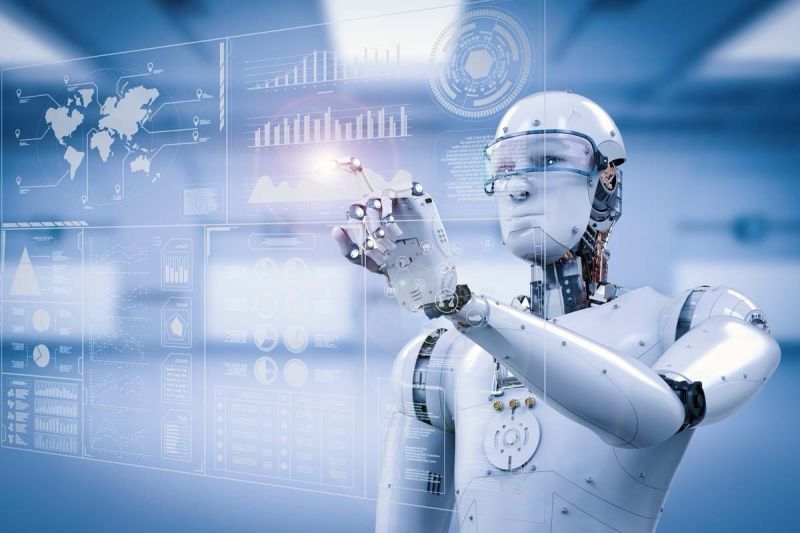
The year 2026 is not just another chapter in the story of robotics — it is the moment the entire narrative changes. For decades, advanced robots were confined to research labs, carefully choreographed demos, and science fiction narratives. That era is decisively over. Today, robots are unboxing goods in warehouses, assisting surgeons in operating rooms, assembling electric vehicles on factory floors, and even navigating the corridors of homes designed entirely for humans.
The global market value of industrial robot installations has reached an all-time high of US $16.7 billion in 2026, according to the International Federation of Robotics. This is not a speculative bubble. It reflects a fundamental structural shift — one driven by converging breakthroughs in artificial intelligence, sensor technology, materials science, and cloud connectivity. What makes this moment genuinely historic is the speed of that convergence and the breadth of industries now being transformed.
This post examines the most significant robotics innovations of 2026, the forces driving them, the challenges that remain, and what all of this means for businesses, workers, and the broader human experience.
The Humanoid Robot Goes From Prototype to Payroll
Perhaps no single development captures the spirit of 2026 robotics more than the rapid maturation of humanoid robots. For years, bipedal machines were impressive engineering spectacles — capable of backflips, but not particularly useful on a factory floor. That calculus has fundamentally changed.
At CES 2026, Boston Dynamics formally introduced the production-ready version of its electric Atlas humanoid. During the keynote, Atlas autonomously rose from a flat position using a non-human joint-flipping maneuver, highlighting the full rotational freedom of its joints. The company also announced a partnership with Google DeepMind to integrate Gemini Robotics AI, enabling Atlas to reason through complex instructions and operate in unstructured environments.
The specifications are notable: the new Atlas features 56 degrees of freedom, a 7.5-foot reach, and a lifting capacity of 110 pounds, with a 4-hour battery and hot-swappable autonomy. Boston Dynamics confirmed that initial units will be deployed in 2026 at Hyundai’s Metaplant in Georgia, marking Atlas’s transition from a research platform to a genuine commercial workforce robot. The Robot Report has been tracking Atlas’s evolution for years, and the gap between what was demonstrated then and what is being deployed now is remarkable.
Tesla’s Optimus is following a parallel trajectory. Tesla plans to produce 50,000 Optimus units in 2026 at a price point of $20,000–$30,000. That pricing, previously unimaginable for a machine of this capability, has been made possible by dramatic reductions in production costs. Manufacturing costs for humanoid robots dropped 40% from 2023 to 2024 — far faster than the expected 15–20% annual decline — potentially advancing factory applications by a year and consumer applications by 2 to 4 years.
China is not standing still either. Beijing Innovation Center of Humanoid Robotics officially launched the Embodied Tien Kung 3.0, a general-purpose robot platform designed with enhanced openness and usability. And China has set specific national targets for mass-producing humanoid robots as part of its broader industrial strategy, treating robotics not merely as a technology sector but as a geopolitical priority.
The common thread across all these efforts is the shift from “can it move?” to “can it work?” Reliability, cycle times, energy consumption, and maintenance costs are now the metrics that matter, not acrobatics.
Physical AI: The Intelligence Layer That Changes Everything
Hardware alone does not explain 2026’s robotics inflection point. The more profound shift is happening in software — specifically in what is now being called Physical AI.
The big story of 2026 is Physical AI. GenAI combined with large language models has changed the face of many industries and is now making its way into robotics. Where earlier robots required explicit, line-by-line programming for every task, modern systems can be instructed in natural language, shown a task once, and then replicate it with increasing accuracy.
IEEE Spectrum has documented how vision-language-action (VLA) models are enabling robots to perceive their environment, interpret spoken or written commands, and execute physical actions — all within a unified framework. Microsoft’s announcement of the Rho-alpha (ρα) model, derived from its Phi series, represents exactly this category: vision-language-action models that enable physical AI systems to perceive, reason, and act with increasing levels of autonomy.
The International Federation of Robotics identifies three distinct types of AI driving this transformation:
- Analytical AI processes large datasets, detects patterns, and provides actionable operational insights — enabling robots to anticipate equipment failures before they occur.
- Generative AI marks the shift from rule-based automation to systems that can adapt, improvise, and evolve their behavior.
- Agentic AI combines both, allowing robots to reason, plan, and execute complex multi-step tasks with minimal human supervision.
The practical result is striking. Modern cobots use embedded AI chips that allow them to learn tasks from demonstration. A technician can guide the robot arm through a motion once, and the cobot replicates it autonomously. This “teach by demonstration” capability is collapsing the traditional barrier between robotics expertise and robot deployment — meaning smaller companies with no dedicated robotics engineers can now integrate automated systems into their workflows.
Collaborative Robots (Cobots): Quiet Revolution at Scale
While humanoids grab headlines, collaborative robots — cobots — are quietly executing one of the most consequential expansions in manufacturing history.
Almost two decades since the first collaborative robot launched, these flexible robots are now a staple in many industries. An important driver of cobot adoption has been the rise of Robots-as-a-Service (RaaS), which put cobots within reach of small and medium-sized businesses.
Unlike their caged industrial predecessors, cobots in 2026 work in direct physical proximity to humans. Modern cobots now work directly beside human workers with advanced safety sensors, force detection, and AI-based movement prediction. The safety paradigm itself has also been updated: the latest ISO 10218 and ANSI/A3 R15.06 industrial robot safety standards have done away with the term ‘collaborative robot’ and replaced it with ‘collaborative applications,’ meaning safety is now defined at the application level and not simply by the type of robot being deployed.
This regulatory evolution matters. It signals that the industry is moving from treating cobots as a special category to treating collaboration as a design principle applicable across all robotic systems.
Sectors seeing the fastest cobot adoption in 2026 include electronics assembly, pharmaceutical packaging, food processing, and small-batch custom manufacturing — environments where flexibility and frequent task-switching are essential and where the return on automation investment can be measured in months rather than years.
Surgical Robotics and Healthcare: Precision at Human Scale
Beyond manufacturing, 2026 has seen continued and significant advances in medical robotics — an area where the stakes are not efficiency metrics but human lives.
Neocis announced in January 2026 that clinicians have successfully completed numerous bone surgeries using the Yomi platform. The company also confirmed that the first clinical cases using Yomi S, its second-generation robotic system, have been successfully completed. Yomi represents a growing class of surgical assistants that operate not by replacing surgeons, but by augmenting their precision — holding instruments steady, providing haptic feedback, and maintaining tolerances that no human hand can sustain over a long procedure.
The Fourier GR-3, unveiled at CES 2026, is targeting a different dimension of healthcare: standing 165 centimeters tall and weighing 71 kilograms, the GR-3 offers 55 degrees of freedom and is equipped with tactile sensors distributed across its body for responsive interaction. Fourier positioned the GR-3 as a proactive assistant targeting eldercare, rehabilitation, and service roles. As aging populations place growing pressure on healthcare systems across Europe, Japan, and North America, robots capable of assisting with patient mobility and basic care represent a genuine societal solution — not just a technology novelty.
Logistics, Warehousing, and the Supply Chain Transformation
If there is a single sector where robotics investment has been most aggressive and most visible, it is logistics. The global supply chain disruptions of the early 2020s accelerated automation investment dramatically, and that momentum has only grown.
In 2026, we are seeing a continued move toward nearshoring using robotic automation — bringing manufacturing closer to a company’s home country by supplementing human labor with robots. Adding AI and automation is allowing companies to manage supply chains in a more agile way, letting them adapt to changes and disruptions quickly.
Truck loading and unloading, order fulfillment, inventory management, and last-mile delivery are all seeing new robotic solutions in 2026. Humanoid pilots in logistics facilities, as RoboDK notes, are showing early results in box sorting and pallet movement — particularly valuable during peak demand periods when labor availability is most constrained.
The economics are compelling. Robots do not call in sick, do not require overtime pay, and can operate 24 hours a day. In a logistics environment, that translates directly to throughput and cost per unit shipped.
The IT/OT Convergence: Robots as Networked Nodes
One of the less-discussed but deeply consequential trends in 2026 is the convergence of Information Technology (IT) and Operational Technology (OT) in robotics environments.
The merge of IT’s data-processing power and OT’s physical control capabilities enhances robotics versatility through real-time data exchange, automation, and advanced analytics. This integration is a foundational element of the digital enterprise and Industry 4.0. The IT/OT convergence breaks down operational silos, creating a seamless flow of data between the digital and physical worlds.
In practical terms, this means a robot arm on an assembly line is no longer an isolated machine running a fixed program. It is a networked node in a broader intelligent system — receiving real-time production data, adjusting its behavior based on upstream and downstream conditions, logging performance metrics to cloud analytics platforms, and flagging maintenance needs before failures occur.
This connectivity also introduces new vulnerabilities. Cybersecurity for robotics environments is becoming a critical discipline, as a compromised robot is not just a data breach — it can be a physical safety incident.
High-Precision Machining: Where Robots Meet CNC Quality
A less headline-grabbing but technically significant development in 2026 is the emergence of robots capable of high-precision machining — traditionally the domain of rigid CNC machines.
Compared to conventional CNC machines, robots have traditionally lacked the stiffness for very high-precision machining. However, recent advancements in both mechanical structures and control algorithms mean that the new wave of machining robots can even handle hard materials like tempered steel.
This matters because robotic machining centers offer something CNC machines cannot: flexibility. A robot can be reprogrammed to machine a different part in minutes; a dedicated CNC setup requires hours of reconfiguration. For aerospace, defense, and advanced manufacturing applications where component complexity is high and batch sizes are small, this capability shift is genuinely disruptive.
Key Robotics Innovations of 2026: Side-by-Side Comparison
| Innovation | Key Players | Primary Application | Commercial Stage | Price Range |
|---|---|---|---|---|
| Humanoid Robots | Boston Dynamics, Tesla, Unitree, Figure AI | Industrial, logistics, domestic | Early commercial | $16,000–$150,000 |
| Collaborative Robots (Cobots) | Universal Robots, FANUC, ABB | Assembly, packaging, QC | Mature / Mainstream | $25,000–$80,000 |
| Surgical Robots | Intuitive Surgical, Neocis, Stryker | Orthopedics, oncology, dentistry | Established / Expanding | Subscription/enterprise |
| AI-Powered Mobile Robots | Amazon Robotics, Locus Robotics, Fetch | Warehousing, fulfillment | Widely deployed | $30,000–$100,000+ |
| Physical AI / VLA Models | Google DeepMind, Microsoft, NVIDIA | Cross-platform robot intelligence | Active deployment | API/Platform licensing |
| Precision Machining Robots | KUKA, Fanuc, ABB | Aerospace, defense, auto | Growing / Expanding | $80,000–$250,000+ |
| Eldercare / Social Robots | Fourier Intelligence, SoftBank Robotics | Healthcare, social assistance | Early commercial | $15,000–$60,000 |
| Construction Robots | Doosan Bobcat, Built Robotics | Earthmoving, material handling | Emerging / Piloting | Varies by platform |
The Workforce Question: Displacement or Transformation?
No honest discussion of 2026 robotics can sidestep the workforce question. Automation anxiety is real, and it deserves a substantive — not dismissive — response.
Job displacement remains a discussion point. However, 2026 trends show rising demand for robot technicians, AI trainers, and automation engineers. Reskilling programs are expanding globally to prepare workers for hybrid human-robot workplaces.
The historical pattern of industrial automation is instructive. The introduction of automated looms, assembly lines, and CNC machinery each generated significant anxiety in their time — and each was followed by net job creation in adjacent roles that required human judgment, creativity, and coordination. The challenge is that transition periods are real and painful for real workers, and the pace of change in 2026 robotics is faster than previous technological waves.
What the data consistently shows is that companies deploying robots alongside well-supported workforces outperform those treating automation as a pure headcount-reduction strategy. The goal of “responsible innovation,” as the IFR frames it, is not unchecked automation but human-robot collaboration that genuinely improves working conditions and economic outcomes.
Ethical Dimensions: Privacy, Autonomy, and Accountability
As robots become more intelligent, more mobile, and more present in daily life, the ethical questions multiply. Several deserve direct attention.
Data collection is the most immediate concern. Robots — particularly those operating in homes, hospitals, and public spaces — collect rich streams of environmental and behavioral data. Who owns that data? How is it secured? What happens if it is monetized or subpoenaed? These questions do not yet have uniform regulatory answers across jurisdictions.
Autonomy and accountability present a harder philosophical challenge. When an AI-powered robot makes a decision that results in harm — whether on a factory floor or in a surgical suite — the question of liability is genuinely unresolved. Is the manufacturer responsible? The operator? The AI developer? Current legal frameworks were not designed for agents that learn, adapt, and act on their own initiative.
Access and equity are equally important. The productivity gains from advanced robotics will not be uniformly distributed. Countries, regions, and firms with capital to invest in automation will compound their advantages. Without deliberate policy intervention, robotics could widen the gap between high-capital and labor-intensive economies rather than lifting both.
What Comes Next: 2026–2030 in View
Between 2026 and 2030, deeper integration of AI, robotics, and next-generation connectivity is expected. Edge computing will allow robots to process data locally with near-zero latency. Home robotics will grow gradually, especially for eldercare and domestic assistance. Industrial automation will become increasingly autonomous, with minimal human oversight for routine operations.
The robotics market of 2030 will look as different from 2026 as 2026 looks from 2016 — a period in which cobots barely existed and humanoid robots were purely experimental. The trajectory points toward systems that are not just automated but genuinely intelligent: capable of learning new tasks continuously, operating safely in unstructured environments, and communicating with human colleagues as natural collaborative partners.
Frequently Asked Questions About Robotics Innovations in 2026
Q: What is the most significant robotics breakthrough of 2026?
The most significant is arguably the commercial deployment of humanoid robots at industrial scale — with companies like Boston Dynamics and Tesla moving from prototypes to production units designed for real factory environments. Equally important is the Physical AI layer enabling these machines to reason and adapt rather than simply execute fixed programs.
Q: How much do humanoid robots cost in 2026?
Prices vary considerably by capability and manufacturer. Unitree’s G1 is available at approximately $16,000. Tesla’s Optimus is priced in the $20,000–$30,000 range. Boston Dynamics’ commercial Atlas targets enterprise clients at $140,000–$150,000. As manufacturing efficiencies improve, prices are expected to decline significantly through 2028–2030.
Q: Will robots replace human workers?
The evidence in 2026 suggests transformation rather than wholesale replacement. Roles requiring physical judgment in complex, variable environments — and roles requiring empathy, creativity, and relational intelligence — remain distinctly human domains. The primary impact is automation of repetitive, predictable physical tasks, with rising demand for robot technicians, AI trainers, and automation system integrators.
Q: What is Physical AI and why does it matter?
Physical AI refers to AI systems specifically designed to control and guide robots in the physical world — combining vision, language understanding, and action into a unified framework. It matters because it removes the need for explicit programming of every task, allowing robots to learn from demonstration and adapt to changing conditions. This dramatically expands the range of environments where robots can be practically deployed.
Q: Are surgical robots safe?
Surgical robotic systems go through rigorous regulatory approval processes before clinical use. Systems like Intuitive Surgical’s da Vinci platform and Neocis’s Yomi have extensive clinical track records. These systems do not operate autonomously — they augment surgeon precision and do not replace surgical judgment. Safety data consistently shows comparable or improved outcomes relative to purely manual procedures.
Q: What industries are being most disrupted by robotics in 2026?
Manufacturing and automotive remain the largest sectors by robot installation volume. However, the fastest-growing application areas in 2026 are logistics and warehousing, healthcare and surgical assistance, construction, agriculture, and eldercare — sectors where the combination of labor shortages and AI-driven adaptability makes the case for automation most compelling.
Q: What is Agentic AI in robotics?
Agentic AI combines analytical AI for structured decision-making with generative AI for adaptability. The result is a robot system that can plan multi-step actions, respond to unexpected conditions, and manage complex workflows with minimal human oversight — moving beyond executing commands to genuinely pursuing goals.
Q: How is China approaching robotics in 2026?
China has made humanoid and industrial robotics a national strategic priority, setting specific production targets and investing heavily in both hardware development and AI research. Chinese companies including Unitree Robotics and the Beijing Innovation Center of Humanoid Robotics are producing competitive systems at aggressive price points, creating significant competitive pressure on Western manufacturers.
Conclusion: Standing at the Inflection Point
The robotics story of 2026 is ultimately a story about convergence — of AI and hardware, of software and steel, of industrial ambition and everyday human need. What was theoretical in 2020 is commercial in 2026. What is being piloted in 2026 will be standard by 2030.
The machines emerging from this period are genuinely different from anything that preceded them. Not just faster or stronger, but smarter — capable of perceiving context, learning from experience, and operating in environments designed for humans rather than machines. That last point is perhaps the most consequential. The previous generation of robots required humans and infrastructure to adapt to their limitations. The current generation adapts to ours.
For businesses, the question is no longer whether to engage with robotics but how to do so intelligently — matching the right technology to the right application, building the human expertise to manage and maintain automated systems, and investing in the workforce transitions that responsible automation requires. Companies treating robotics as a cost-cutting exercise alone will find themselves outcompeted by those that treat it as a capability-building investment.
For workers, the practical path forward runs through adaptation and reskilling. The demand for people who understand robotic systems — who can program, maintain, troubleshoot, and train them — is growing faster than the supply. Technical education and retraining programs aligned with this demand represent one of the most reliable routes to economic security in an increasingly automated economy.
For policymakers, the challenge is to create regulatory frameworks that keep pace with innovation without either strangling it or permitting it to proceed without adequate safeguards. Data privacy, liability for autonomous systems, and the equitable distribution of productivity gains are policy questions that cannot wait for the technology to fully mature.
And for all of us as observers and participants in this moment, the invitation is to engage with the change rather than react to it. The robotics revolution of 2026 is not a distant event. It is unfolding in hospitals and warehouses and factory floors right now. Understanding it — its mechanisms, its trade-offs, its human dimensions — is both practically valuable and genuinely fascinating.
The machines are here. The question worth asking now is not what they can do, but what we choose to do with them.